


Modular construction has shifted from the margins to the mainstream across Asia. Once used mainly for temporary site offices, factory-built systems now deliver permanent housing, hotels, data centres, healthcare facilities and large-scale public infrastructure. The Asia-Pacific modular construction market was valued at around $43 billion in 2025 and is forecast to reach $71.2 billion by 2032, growing at a compound annual rate of 7.5%, according to Fortune Business Insights. The region already accounts for roughly 47% of global modular construction revenue.
Several factors are driving this. Labour shortages, high on-site costs and long planning timelines continue to slow traditional projects across most Asian markets. Policy is pushing the same direction: China’s 14th Five-Year Plan requires 30% of new urban construction to incorporate prefabricated methods by 2027, while India’s national urban housing missions are creating sustained demand for faster, lower-cost delivery at scale. At the same time, governments and institutional investors are pushing for greater delivery certainty and stronger environmental performance. Off-site fabrication can reduce construction schedules by 30% to 50% compared with conventional methods, while on-site labour requirements can fall by up to 30%. A peer-reviewed study by Loizou et al. (2021) found that modular methods reduce material waste by up to 83% compared with traditional sites, a figure that has become central to the environmental case for the sector.
By 2025, the sector had moved well beyond pilot schemes. Leading firms across the region now deliver buildings at scale, domestically and internationally. Some operate as specialist manufacturers; others act as full-service developers bringing together design, production, logistics and assembly. The ten companies below represent the current state of modular construction across Asia, selected for their active role in shaping how the region builds today.
1. Daiwa House Industry
Japan | Diversified Infrastructure & Industrialised Housing
Daiwa House Industry is one of Japan’s most established homebuilders and a long-standing leader in prefabricated construction. While housing remains central to its business, the company has increasingly applied its modular expertise to specialist building types requiring high precision and rapid delivery.
In December 2025, Daiwa House announced it would offer small prefabricated data centres that can be assembled on site in approximately one year, targeting demand outside major metropolitan areas amid the growth of generative AI. The product is designed to reach markets where large-scale data centre infrastructure is otherwise slow to arrive.
The company also launched a tender offer in October 2025 to acquire electrical engineering firm Sumitomo Densetsu in a deal valued at 292 billion yen (approximately $1.89 billion), according to Nikkei Asia. The bid was confirmed successful in December 2025. The acquisition is intended to build technical capability in data centre development, including power supply solutions for remotely located facilities.
At the residential level, Daiwa House’s precision-manufactured homes are produced using advanced robotics and quality control systems. Through its Daiwa House Modular Europe subsidiary, based in the UK and the Netherlands, the group claims to be the largest modular builder in Europe. Its factories are increasingly powered by renewable energy, in line with broader low-carbon manufacturing commitments.
2. Sekisui House
Japan | Sustainable Multi-unit & Detached Housing
Sekisui House is known internationally for combining industrialised housing with strong environmental performance. The company has been a leader in Japan’s shift towards Net Zero Energy Homes and, in fiscal year 2024 (ending March 2025), 96% of its new detached housing met or exceeded ZEH standards, a new record for the company. That figure compares with 93% in fiscal 2022. As of March 2025, the company had supplied 83,541 ZEH-compliant homes in Japan, the highest total of any builder in the world. The ZEH-M standard, Japan’s equivalent benchmark for multi-unit residential buildings, is now a core target for the country’s modular housebuilders, with Sekisui House among the companies pushing to extend its factory-built efficiency gains into that segment.
Sekisui House completed its $4.9 billion acquisition of MDC Holdings on 19 April 2024, making it the fifth largest homebuilder in the US with an annual supply of approximately 15,000 units across 16 states. The deal brought the Richmond American Homes brand into the Sekisui group alongside Woodside Homes, Holt Homes, Chesmar Homes and Hubble Homes, and is the clearest signal yet that Japan’s factory-built model is being exported to Western markets at scale.
Sekisui House has built over 2.7 million homes globally, with a presence in Japan, the US, the UK, China, Singapore and Australia. Its factories have operated under zero-waste principles for several years, recycling materials across the production process. In December 2025, the company was selected for the CDP Triple A List for the second time across climate change, forests and water security. It is the only company in Japan’s housing and construction industry to have achieved this distinction. CDP evaluated more than 22,100 companies in 2025. The company’s Gohon no Ki indigenous landscaping programme, launched in 2001, has seen over 20.69 million trees planted across Japan.
3. CIMC Modular Building Systems
China | Global Volumetric Hospitality & Infrastructure
CIMC Modular Building Systems is one of the world’s largest producers of fully volumetric modular buildings. Operating as a division of the CIMC Group, it has refined an industrial system where the majority of construction work is completed off-site, allowing projects to be delivered in significantly shorter timeframes with reduced material waste. The company holds BOPAS (Buildoffsite Property Assurance Scheme) accreditation for its UK operations, reflecting its commitment to long-term structural performance standards.
By 2025, CIMC MBS had expanded well beyond China, supplying modular buildings across Europe, the Middle East and Africa. Its integrated model combines research, design, manufacturing and global logistics. The company has delivered over 70 projects with more than 45,000 rooms across the UK, US, Australia, Iceland, Norway, Africa, Japan and Hong Kong, working in over 20 countries and regions in total.
Recent projects include the 240-room citizenM Hotel in Menlo Park, California, built across five storeys using 161 modules, and Hong Kong’s first modular legislative office, completed in 2024. In May 2025, the company signed a contract to deliver the Earth Riyadh Hotel in Saudi Arabia, a three-storey, four-star boutique property covering 11,000 square metres and offering 86 rooms, lofts and suites. Located in Riyadh’s Al Maathar district, the hotel is scheduled for completion in 2026. CIMC MBS’s modular approach is expected to cut construction time by over 50% compared with traditional methods, according to the company’s own projections. The project sits within a broader wave of Saudi hospitality development: the kingdom reached its Vision 2030 target of 100 million annual visitors in 2023, three years ahead of schedule, and has since revised its target upward to 150 million visitors by 2030.
4. GS Housing Group
China | High-Volume Steel Modular Integrated Construction
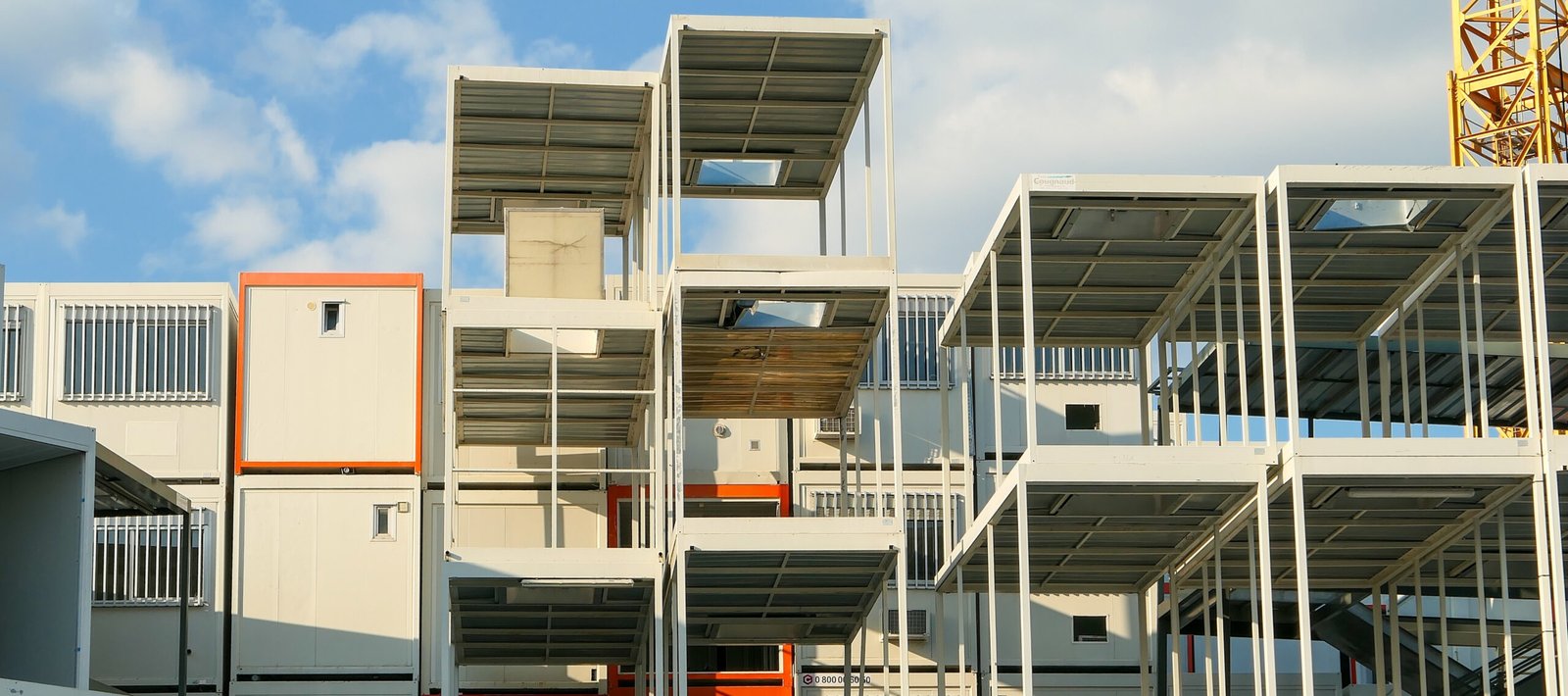
GS Housing Group operates one of China’s largest industrial bases for modular construction, with production facilities spread across several provinces. The company focuses on Modular Integrated Construction, delivering permanent steel-structured buildings designed for long-term use rather than temporary accommodation.
In recent years, GS Housing has expanded into overseas markets, particularly the Middle East and Central Asia, where demand for fast, large-scale development is strong. Its strength lies in high-volume manufacturing capacity and the ability to standardise quality across thousands of units. Supported by in-house research and material development, the company has become a key delivery partner for governments and developers seeking speed, cost certainty and industrial-scale output.
5. Broad Homes Industrialised Systems
China | Digital Manufacturing & Rapid High-Rise Systems
Broad Homes is widely regarded as a pioneer of industrialised construction in China. The company applies digital manufacturing, standardised components and intelligent production systems to deliver buildings at a pace that traditional construction methods cannot match.
The structural heart of its system is B-Core, a sandwich-structure stainless steel material developed over more than a decade. B-Core is used in Broad’s Holon modular building system, a 100% factory-made, concrete-free product designed to Passive House standards that cuts energy consumption by over 80% compared with a conventional building of the same area. The 11-storey Holon Home Garden A1 in Changsha, comprising 56 modules, was stacked on site in 28 hours and 45 minutes. In December 2025, Broad completed the Earth Tower in Abu Dhabi, a 16-storey modular residential tower developed for Eagle Hills. Its 259 modules were manufactured in 30 days and hoisted on site in 96 hours.
By cutting labour intensity and improving energy efficiency, Broad Homes has aligned closely with China’s push towards greener, more industrialised urban development, while its Abu Dhabi delivery confirms its growing reach as an international supplier.
6. Kajima Corporation
Japan | Site Automation & Heavy Infrastructure Robotics
Kajima Corporation represents the intersection of modular construction and advanced automation. While not a residential modular developer in the traditional sense, the company has played a significant role in changing how industrialised construction is delivered in Japan.
Its proprietary automated construction systems transform sites into highly controlled, data-driven environments, responding to Japan’s well-documented labour shortages and site safety challenges. By converting skilled manual operations into repeatable digital processes, Kajima has improved consistency and reduced on-site risk across complex projects. Its research into automated and off-site construction continues to inform how large-scale modular and prefabricated systems are developed across the region.
7. Surbana Jurong
Singapore | Systems Integration & Urban Master Planning
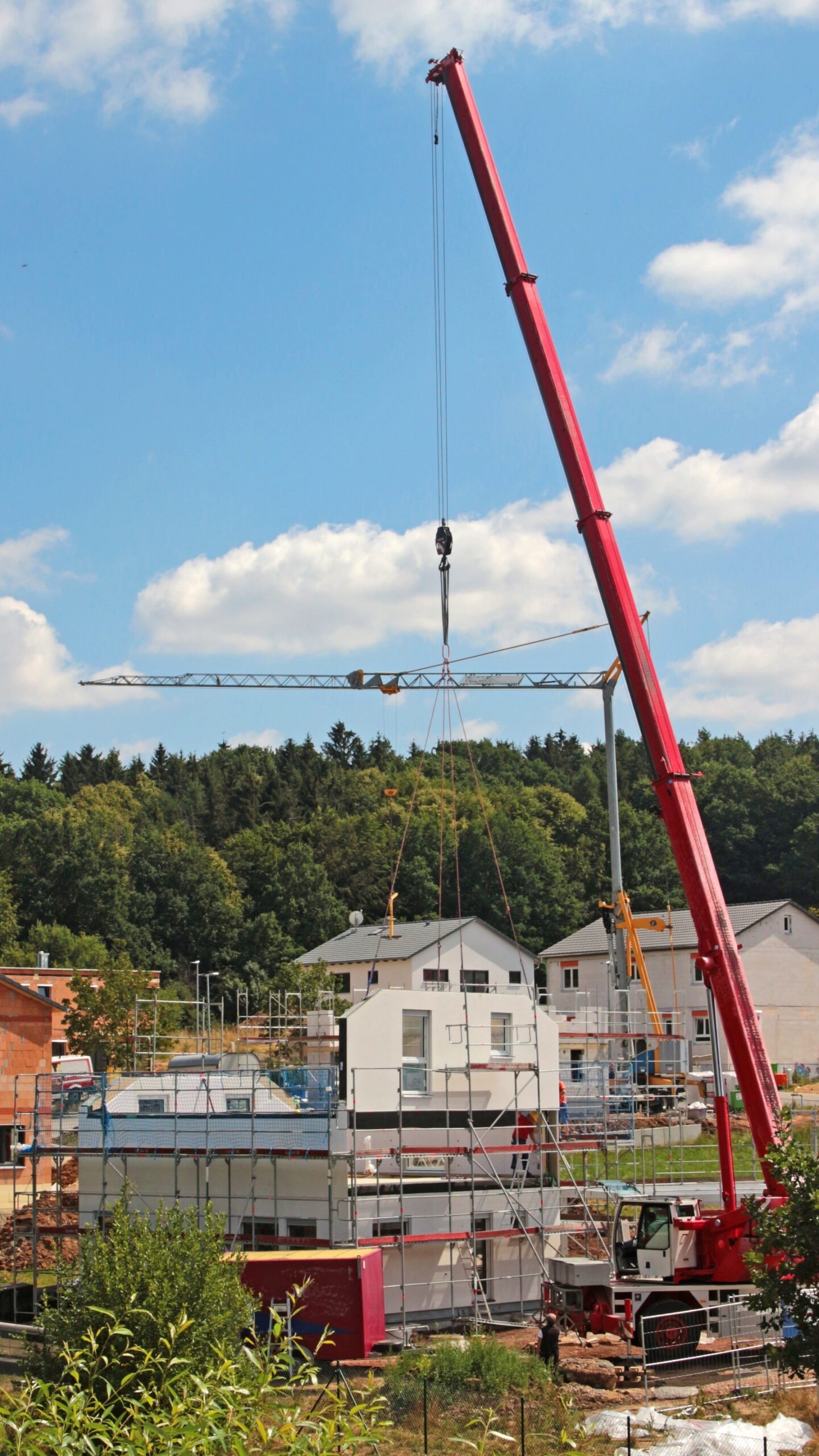
Singapore’s modular construction model is built around Prefabricated Prefinished Volumetric Construction (PPVC), and Surbana Jurong plays a central role in this framework. The firm acts as a master planner, consultant and systems integrator rather than a module manufacturer.
PPVC has been widely adopted across Singapore’s public housing, healthcare and institutional projects, driven by national productivity targets and labour constraints. Since November 2014, Singapore’s Building and Construction Authority has required that selected Government Land Sales sites use PPVC for at least 65% of total constructed floor area in residential developments. Modules are typically manufactured offshore, mainly in Malaysia or China, and assembled locally under strict quality controls. The method can deliver up to 50% savings in time and manpower, though it typically carries a 10-20% cost premium.
The regulatory context is tightening further. Singapore’s Green Building Masterplan targets what it calls “80-80-80 by 2030”: 80% of buildings to be Green Mark certified, 80% of new developments to meet Super Low Energy (SLE) standards and an 80% improvement in energy efficiency over 2005 levels. PPVC and modular construction are among the primary methods developers are using to meet the SLE threshold, given the tighter control over insulation, glazing and mechanical systems that factory assembly allows.
Surbana Jurong projects include The Wisteria, the first Government Land Sales residential project to use PPVC extensively, the Crowne Plaza Changi Airport Extension, Woodlands Nursing Home, multiple NTU undergraduate halls and Connect@Changi, a facility housing 660 guest rooms and 150 meeting rooms built using modular construction inside Singapore EXPO halls.
The Clement Canopy in Singapore, completed in the first quarter of 2019, was at the time the world’s tallest concrete modular building. Its twin 40-storey towers, standing 140 metres high, were assembled from 1,899 modules each weighing between 16 and 30 tonnes. The project achieved a manpower productivity improvement of 72% compared with the Singapore industry average and was delivered six months ahead of schedule. It has since been surpassed in height by the 56-storey Avenue South Residence, also in Singapore, completed in 2023.
8. GS Engineering & Construction: XiGEIST
South Korea | Customised Luxury Modular Housing
XiGEIST, a modular housing brand under GS Engineering and Construction, focuses on factory-built homes that combine speed, precision and buyer choice. Operating from a dedicated production facility in South Korea, the company delivers residential units using a modular system that allows considerable customisation without sacrificing manufacturing efficiency.
A key feature is its digital configuration platform, which allows buyers to design their homes by selecting from a range of standardised modules. This allows homes to be designed, produced and installed within a short timeframe. In recent years, XiGEIST has expanded into hybrid structural systems, applying its modular expertise to both private housing and public-sector residential projects.
9. ZN House
China | Climate-Resilient & Disaster-Relief Systems
ZN House is a Chinese manufacturer that addresses environmental challenges across Asia through climate-resilient modular housing, with a notable presence in the Philippines. The company’s systems use Corten steel frames with galvanised coating for corrosion protection, and structural detailing designed to perform under extreme conditions, including typhoons, earthquakes and flooding.
Its container houses use Q235 steel with main sheets and columns at 2.2mm thickness, 75mm rock wool panels rated to withstand wind pressure of up to 65 kg/m², and structural designs verified for seismic safety. From 2016 onwards, ZN House has delivered multiple projects in the Philippines. In 2024, it completed a 72-unit typhoon-resistant container housing project for a coastal community in five months. The units featured heat-reflective nano-coatings, communal facilities and IoT-enabled utilities management.
Beyond the Philippines, the company has delivered projects across Asia including Malaysia, where it supplied foldable container dormitories, and Saudi Arabia, where it built a 3,000-capacity power construction camp with solar microgrids. Its work reflects a growing trend in South-East Asia towards modular systems designed for local climate conditions rather than imported design models. Buildings are rated for a lifespan of up to 20 years.
10. Moduli
India | Premium Lifestyle & Volumetric Portability
Moduli operates at the premium end of India’s modular construction market, delivering factory-built spaces designed for rapid installation and high design quality. Based in Hyderabad with over 25 years of experience, the company’s volumetric units are largely completed off-site and transported for plug-and-play assembly, cutting construction timelines considerably compared with conventional methods.
A distinctive feature of Moduli’s system is portability: buildings can be dismantled and relocated, offering flexibility not found in standard real estate development. The company targets lifestyle-driven projects including private residences, farmhouses, hospitality spaces and experiential retail. It claims its construction process is typically five times faster than traditional building methods, with cost savings derived from reduced delays, lower material waste and less on-site labour. Structures are built with mild steel and subjected to strict quality checks, with the company marketing its buildings as comparable in durability to reinforced concrete construction.
What to Watch
The direction of travel across Asia is clear. Factory-built construction is no longer a niche approach reserved for temporary structures or low-budget housing. It is now the delivery mechanism of choice for governments, institutional developers and hospitality groups dealing with tight timelines, skilled labour gaps and tougher environmental targets. In Japan, modular production is central to the ZEH-M rollout for multi-unit buildings; in Singapore, it is a primary route to SLE building status under the Green Building Masterplan.
The Asia-Pacific market is the fastest-growing modular construction region in the world and is forecast to reach $78.2 billion by 2033, at a compound annual rate of 9.2%, according to Grand View Research. Within that forecast, India and the Philippines are among the markets showing the clearest acceleration, driven by large urbanisation backlogs and growing policy support for faster, lower-cost delivery methods. The pipeline of projects across the Middle East, South-East Asia and the subcontinent points to a widening client base, stretching from transitional social housing to four-star hotels and edge data centres.
The firms featured here are not outliers. They are setting the pace for how construction gets done across the region.


![[IRHM] logo](https://irhmagazine.com/wp-content/uploads/2025/08/IRHM-AWARDS-2025-1024x683.jpg)