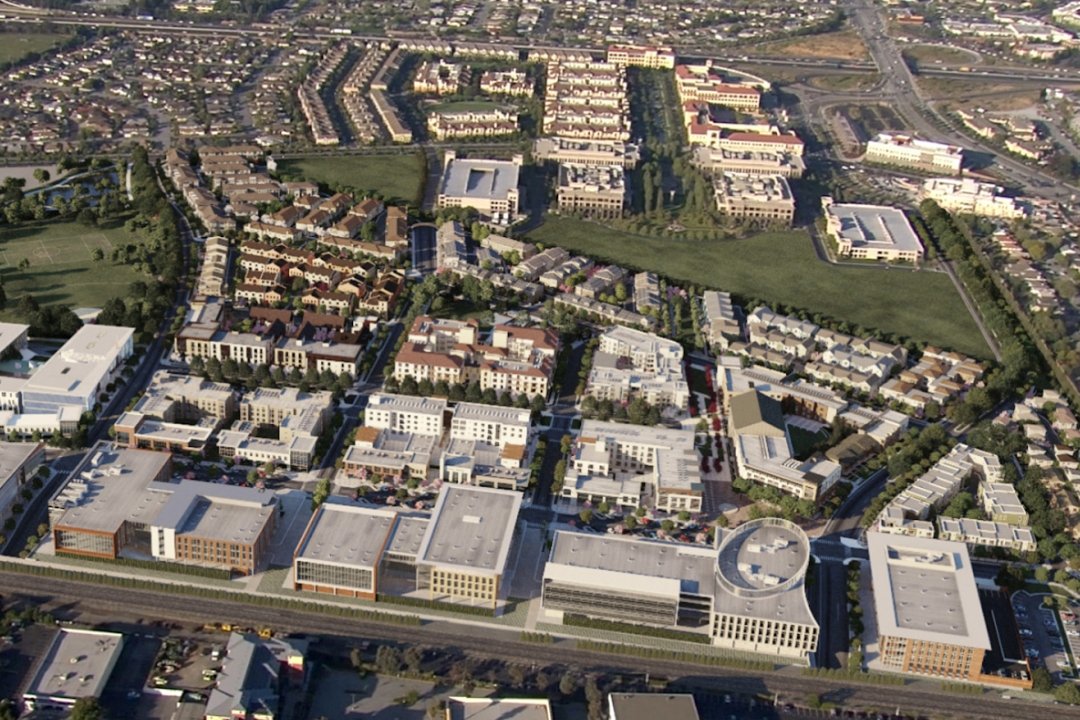




With the Navi Mumbai International Airport (NMIA) set to begin operations in September, preparations for a massive Aerocity project on 667 acres of land adjoining the airport are moving ahead at pace. The City and Industrial Development Corporation (CIDCO) has floated a tender to appoint a consultant who will prepare the Master Plan and also act as transaction advisor for the development.
The Aerocity has been envisioned as a mixed-use hub that will allocate around 123 acres each for residential, commercial and retail zones, along with substantial areas for industrial and other projects. Officials confirmed that a techno-economic feasibility study will be carried out to assess opportunities for commercial, retail, residential, industrial and mixed-use development.
The tender documents state that the consultant will be required to evaluate the present urban landscape, development patterns, and real estate trends in Navi Mumbai, taking into account the commissioning of the airport and other large infrastructure projects. These include the Navi Mumbai Airport Influence Notified Area (NAINA), the Mumbai Trans Harbour Link (MTHL) or Atal Setu, new metro lines, suburban railway expansions and upcoming port and highway projects. Officials said the Master Plan would provide crucial insights into market requirements, financial feasibility and infrastructure design while keeping in mind both domestic and international perspectives.
Land for the Aerocity was acquired during the construction of the airport itself, ensuring that the project can now move into the planning and design phase without delay. CIDCO, which has overseen the planning and growth of Navi Mumbai since it was conceived as a satellite city in the 1970s, has already developed 14 nodes with mixed residential, commercial and retail functions, and sees the Aerocity as an extension of this long-term development strategy.
Real estate developers and industry leaders believe the new airport and its adjoining Aerocity will give the region an unprecedented opportunity for carefully planned expansion, something Mumbai’s older areas historically lacked. Interest in property around the airport has already surged. Developers report that many pilots and aviation professionals, particularly those close to retirement, are exploring long-term investments in the region.
Across the country, Aerocity projects are emerging as prominent development models. At present, India has nine such projects either operational or in progress, including those at Delhi, Hyderabad, Mohali, Durgapur, Jewar near Noida, Ayodhya, Devanahalli near Bengaluru, and now Navi Mumbai.
The Navi Mumbai International Airport itself has been in the works for nearly three decades. First proposed in 1997 as a secondary airport to ease congestion at Mumbai’s main hub, it will be operated by the Adani Group, which also manages Chhatrapati Shivaji Maharaj International Airport. With its inaugural flight expected in the coming months, the airport and the surrounding Aerocity are seen as catalysts that could reshape growth across the Mumbai Metropolitan Region and beyond.

![[IRHM] logo](https://irhmagazine.com/wp-content/uploads/2025/08/IRHM-AWARDS-2025-1024x683.jpg)