

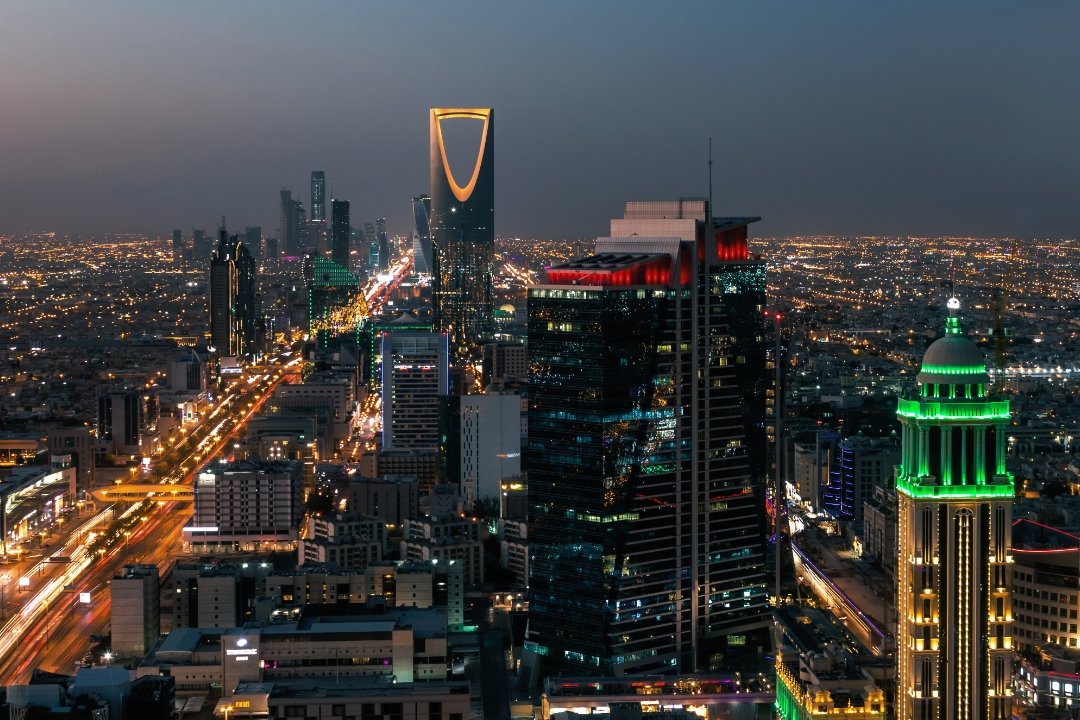
Riyadh has cemented its place at the heart of Saudi Arabia’s thriving commercial property market, with prime office rents soaring by 23% over the past year, according to fresh research from a leading property consultancy.
By the end of March, rents for high-end office spaces in the capital had climbed to SAR 2,700 per square metre — the highest rate recorded to date — fuelled by government initiatives such as the regional headquarters programme, which is encouraging major companies to set up base in the Kingdom.
Saudi Arabia’s drive to boost its real estate sector forms a crucial part of its Vision 2030 plan, which seeks to transform the country into a business and tourism powerhouse. Officials expect the overall property market to grow to more than $100 billion by the end of the decade, expanding at around 8% annually.
The surge in office demand has pushed occupancy levels close to full capacity. Premium, or ‘Grade A’, offices in Riyadh reported an eye-watering 98% occupancy rate by March’s end, with slightly more affordable ‘Grade B’ spaces not far behind at 97%. Even in the latter category, rents were up 24% on the year.
Riyadh’s top-tier offices, typically found in the city’s most sought-after districts, command higher prices thanks to modern designs, cutting-edge amenities and prime locations. Meanwhile, Grade B options remain a popular choice for firms seeking more budget-friendly premises without sacrificing location.
One key factor behind this upward trend is the Kingdom’s aggressive push to attract multinational companies. By February, around 600 firms had committed to establishing their regional headquarters in Saudi Arabia — a major boost for the office market.
The government is offering an enticing package of perks to woo global firms, including a 30-year corporate tax exemption and a range of discounted services and benefits to help ease the move.
Meanwhile, Jeddah’s office market is also showing signs of impressive growth. Both top-tier and mid-range offices had occupancy levels of 95% at the close of the first quarter. Average rents for Grade A offices in Jeddah stood at SAR 1,280 per square metre, up 4% on last year, while Grade B rents rose 6% to SAR 845.
Jeddah’s office space is set to expand further in the coming years, with supply expected to rise from 1.6 million square metres currently to 1.8 million by 2027. Major developments in the pipeline include Jeddah Gate and Jeddah Rose, which together will add over 250,000 square metres of fresh office stock by the end of 2028.
In May, Jeddah’s local authorities unveiled 29 fresh investment opportunities, spanning sectors such as retail, housing, industry and entertainment — highlighting the city’s ongoing transformation.
Elsewhere, Saudi Arabia’s retail property market is gaining momentum, aided by a growing population, rising tourism and continued efforts to diversify the economy away from oil. Analysts suggest demand for retail space will only grow stronger as more international brands enter the market and large-scale projects come to fruition.
Hospitality Sector on the Rise
The Kingdom’s hospitality sector also continues to post strong results, with hotel performance improving across the board. By March, the average daily rate for hotel rooms had risen by nearly 11% compared with the same period last year, while revenue per available room jumped by over 12%.
Much of this growth has been driven by the religious tourism sector. In Makkah, room rates surged by almost 29% in the first quarter, while occupancy-linked revenues climbed by more than a third. A rise in Umrah pilgrim visas has contributed to the city’s strong showing.
With over 8,500 new hotel rooms currently under construction in Makkah, the city’s total inventory is projected to exceed 71,000 rooms by 2027.
Madinah, another key destination for religious tourism, also saw solid gains. Room rates were up nearly 12%, with revenue per available room growing by over 15%. More hotels are on the way too, including new developments from global chains such as Hilton and Marriott, with thousands of rooms expected in the next few years.
Among the most ambitious schemes is Rua Al-Madinah, a giga-project near the Prophet’s Mosque that aims to bring more than 47,000 new hotel rooms to the area — a move set to firmly position the city as a top destination for religious travellers.
Kingdom Becomes Data Powerhouse
Beyond bricks and mortar, Saudi Arabia is also rapidly becoming the region’s data centre capital. The market is projected to nearly double by 2029, growing from $1.78 billion last year to around $3.2 billion, driven by government backing and large-scale private investment.
IT capacity is forecast to jump from around 300 megawatts currently to more than 1,000 megawatts by the end of the decade, thanks to soaring demand for cloud services and digital infrastructure.
Several major players have already committed substantial investments. Global tech giants such as Amazon Web Services, Microsoft, Google Cloud and Oracle have either launched or expanded operations within the Kingdom, while local and regional firms are also joining the race.
In February, ServiceNow confirmed plans to open new data centres in Saudi Arabia by 2026, while Alfanar Global Development pledged $1.4 billion to build four cutting-edge facilities.
Saudi Arabia’s ambition doesn’t stop there. In November, it launched Project Transcendence — a $100 billion initiative focused on artificial intelligence and data infrastructure, aiming to propel the country into the ranks of the world’s leading AI players.
![[IRHM] logo](https://irhmagazine.com/wp-content/uploads/2025/08/IRHM-AWARDS-2025-1024x683.jpg)