

US energy and compute manufacturer Torus has introduced Foundry, a modular AI infrastructure platform developed to address the surging global demand for AI inference capacity.
Alongside the product launch, Torus announced that it has secured $500 million in growth funding, in an investment round led by Magnetar.
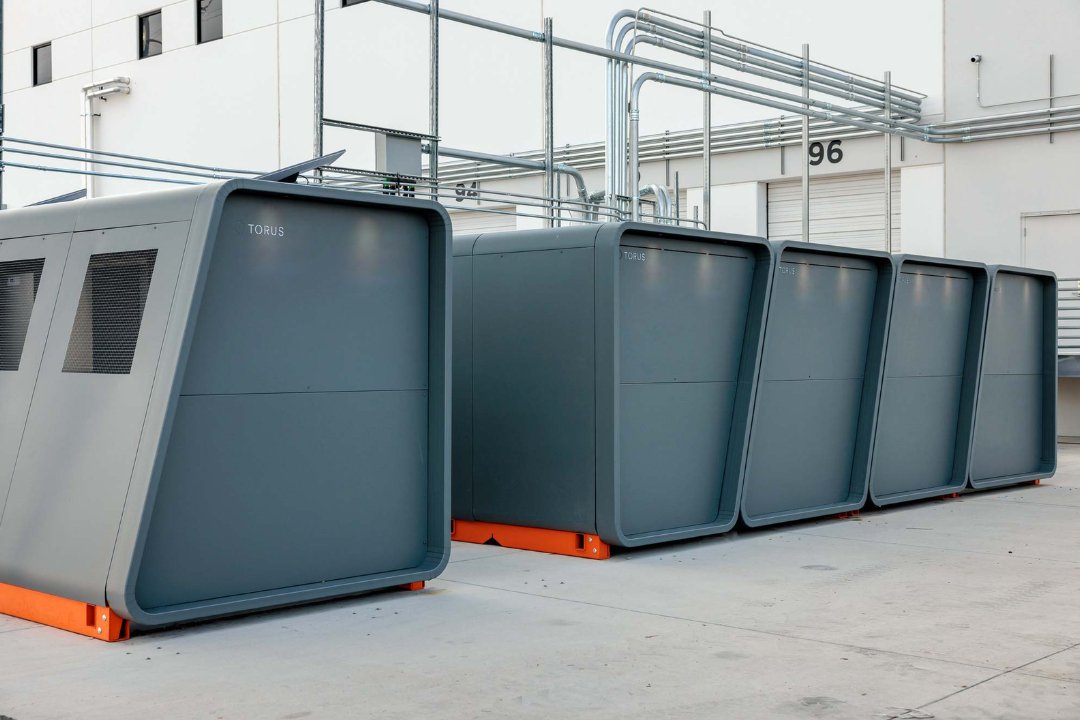
Foundry integrates compute, networking, cooling, power and energy storage into a single prefabricated modular system. The architecture is engineered to provide between 1 and 20 megawatts of inference capacity per site, transitioning from contract to active compute within 12 to 16 weeks. Traditional hyperscale data centre developments typically require several years to complete.
Data centre demand for AI inference is projected to grow by 35 per cent annually through 2030, compared to 22 per cent for AI model training, according to figures from McKinsey.
The system relies on accessing unused grid capacity situated between substations and commercial or industrial properties by utilising existing grid interconnections. Every unit connects directly with Torus Reserve, the firm’s energy storage system. Reserve applies load-shaping rules to balance demand, deliver inertial-based firm power and support rapid grid adjustments within milliseconds.
“Inference doesn’t have to wait. We’ve spent years learning how to make the grid more affordable, flexible, resilient, and intelligent, and Foundry applies that to compute: capacity in weeks, with power that’s already available. Most providers are bringing power to the chips. Foundry brings the chips to power.” – Nate Walkingshaw, Founder & CEO
“The industry has been trying to solve AI’s power problem by building net-new infrastructure, which causes costs to potentially rise and takes years to bring compute online,” said Nate Walkingshaw, CEO and Founder of Torus. “Inference doesn’t have to wait. We’ve spent years learning how to make the grid more affordable, flexible, resilient, and intelligent, and Foundry applies that to compute: capacity in weeks, with power that’s already available. Most providers are bringing power to the chips. Foundry brings the chips to power.”
The core approach stems from Torus’s finding that energy constraints in the US relate primarily to available grid capacity rather than raw power generation. Because AI inference runs continuously and benefits from local proximity to users, distributed edge compute setups allow enterprises to maintain data control and security without relying exclusively on centralised hyperscale facilities.