

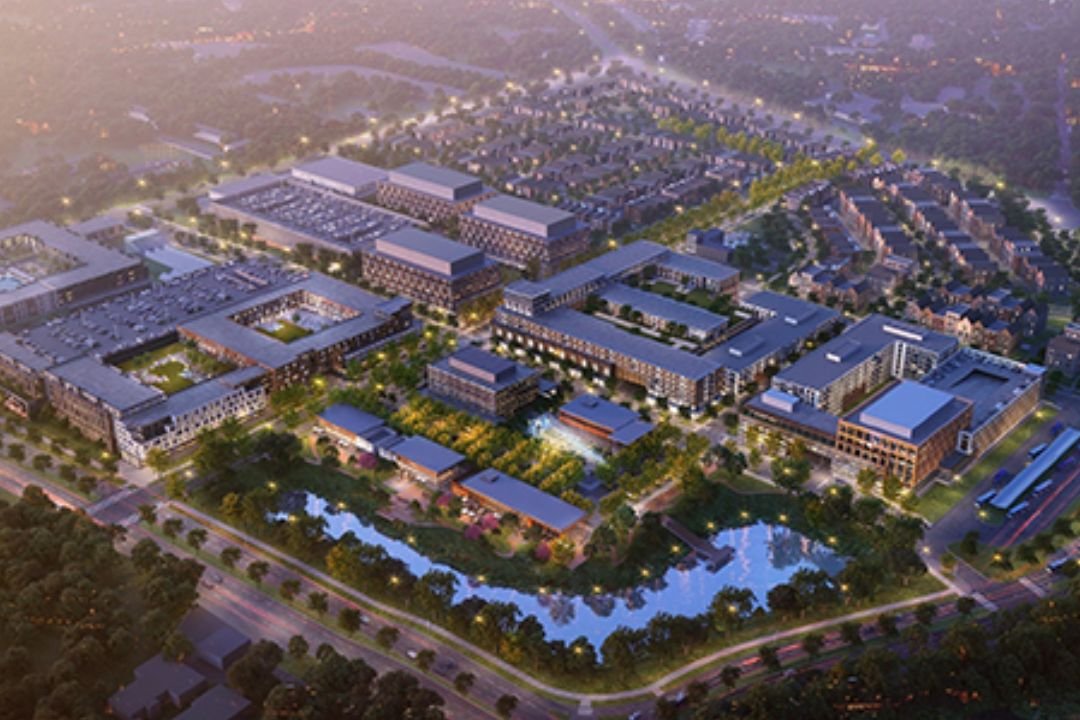

Work has officially started on the $1.2 billion transformation of the former Lakeforest Mall in Gaithersburg, Maryland. WRS Inc., a development firm from Charleston, South Carolina, is leading the massive project to turn the 102-acre site into a modern, mixed-use “mini-city.” The mall originally closed its doors in 2023.
Located in the northern suburbs of Washington, D.C., the project aims to replace 1.1 million square feet of dated retail units and car parks. The new design follows a grid of walkable streets and public spaces. Local leaders hope the site will become a vibrant hub for the community once again.
“This is more than just a construction project; it is the rebirth of a community anchor,” says Kevin Rogers, principal of WRS. “We are proud to deliver a project that honors the legacy of Lakeforest while looking firmly toward the future of Gaithersburg.”
The development features a diverse range of housing and commercial facilities. National builder NVR will construct 600 homes for sale. Additionally, the plan includes 600 rental apartments and 250 workforce housing units managed by Potomac Housing Development. The site will also offer 470,000 square feet of retail space. Major brands such as The Home Depot, Sprouts Farmers Market and Landmark Theatres have already signed leases.
Sustainability and transport are key focuses of the master plan. Residents will have access to 35 acres of green space, featuring ponds, a boardwalk and cycle paths. A new Lakeforest Transit Center will also be built. This hub will support the local Ride On Bus Service and the upcoming MD 355 Flash Bus Rapid Transit system.
Phase one is currently in progress. This stage involves demolishing the old mall, installing drainage systems and laying down the new road network. Building work on the first shops and homes will begin shortly after. WRS first began buying parts of the mall in 2019 and secured funding from PCCP in 2022. The Gaithersburg City Council approved the rezoning of the land with a unanimous 5-0 vote in 2023. Experts suggest the completed project will contribute $1.7 billion to the economy every year.




![[IRHM] logo](https://irhmagazine.com/wp-content/uploads/2025/08/IRHM-AWARDS-2025-1024x683.jpg)