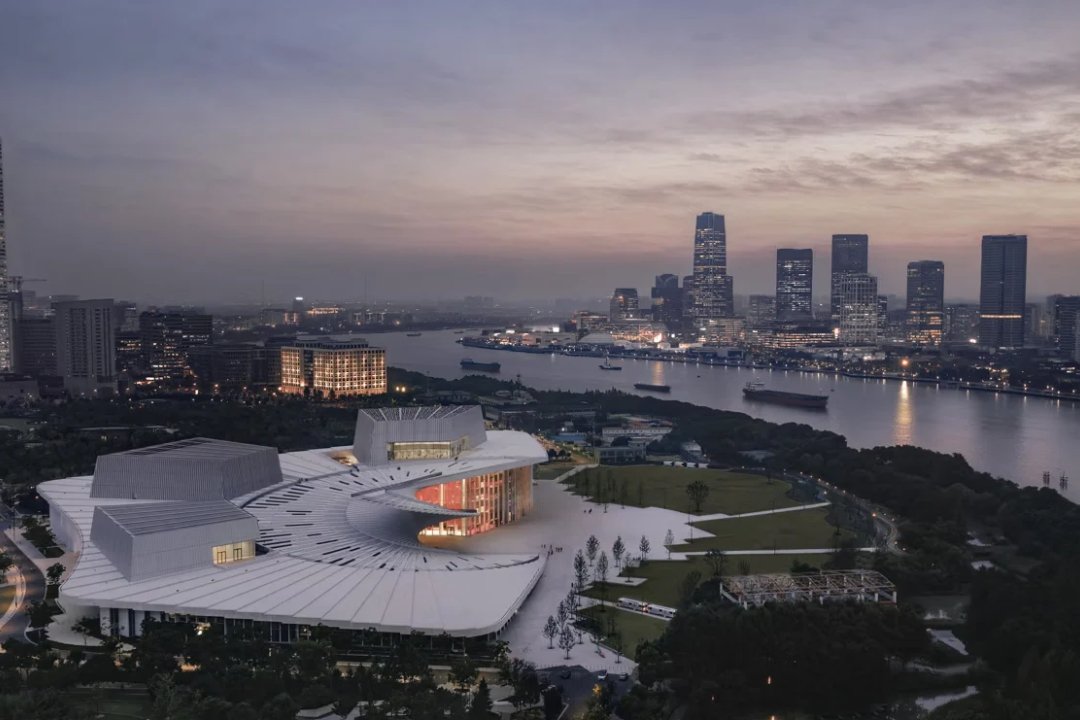




China now runs more autonomous vehicles, more automated ports and more AI-managed transport infrastructure than any other country, and the pace of deployment over the past eighteen months has been striking even by the industry’s own standards. This is fundamentally a technology story: competing autonomous driving stacks, automated cargo-handling systems, and new vehicle-energy architectures are all racing towards commercial scale faster than regulators or, in places, the operators themselves can fully keep up with. With the domestic autonomous vehicle market surpassing $23 billion in 2025 and driving massive infrastructure investment, the physical footprint of this rollout is expanding fast. While the physical buildings and land this technology needs are paramount for real estate developers and hospitality investors, the story worth understanding first is what the technology is actually doing and how fast it is moving.
The robotaxi race
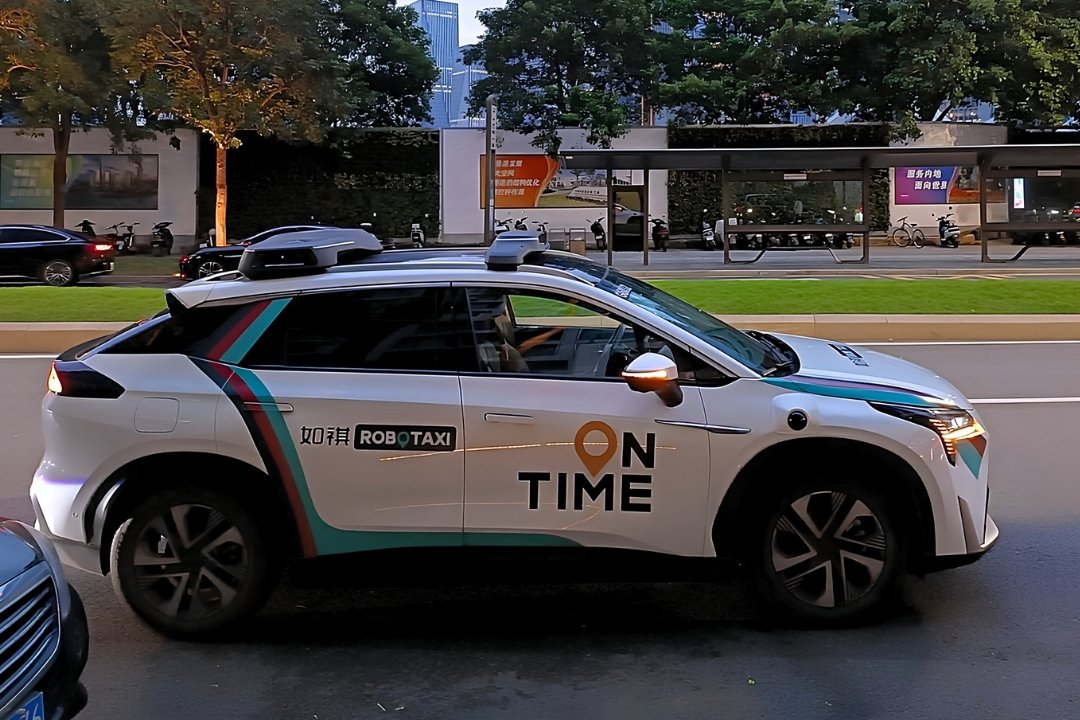
Baidu’s Apollo Go is the clearest leader. By January 2026, the service was operating in approximately 20 Chinese cities. It delivered 3.1 million fully autonomous ride orders in the third quarter of 2025 alone, representing a 212 per cent year-on-year growth rate, with weekly driverless orders exceeding 250,000 by October 2025. Rather than focusing solely on scale, the company has pushed hard on unit economics. Baidu cut the production cost of its sixth-generation robotaxi to around 200,000 yuan, a 60 per cent drop from the previous generation, and has stated it is targeting per-vehicle profitability.
Pony.ai and WeRide are chasing at a meaningfully smaller scale but growing quickly. Pony.ai expanded its fleet past 1,700 vehicles by May 2026 and has since raised its year-end fleet target to over 3,500 vehicles. WeRide’s global robotaxi fleet reached 1,125 cars by early 2026, with more than 800 of those operating domestically in China. Reported fleet numbers and city counts vary somewhat between sources depending on the exact reporting date, which is normal for a sector expanding this quickly. However, every source agrees on the direction: fast, sustained growth, with China now hosting a larger combined commercial robotaxi presence than the United States.
The technology has not been without failure. On 31 March 2026, nearly 100 Apollo Go vehicles suffered a coordinated system failure in Wuhan, stalling simultaneously in what appeared to have been a software fault rather than a hardware one. Central government ministries subsequently ordered industry-wide safety rectifications, and operators entered a temporary regulatory cooling-off period. What is notable is that Pony.ai and WeRide kept expanding their fleets through the pause rather than pulling back, which operators have read as a sign that Beijing’s underlying policy support for the sector has not weakened even as safety oversight has tightened.
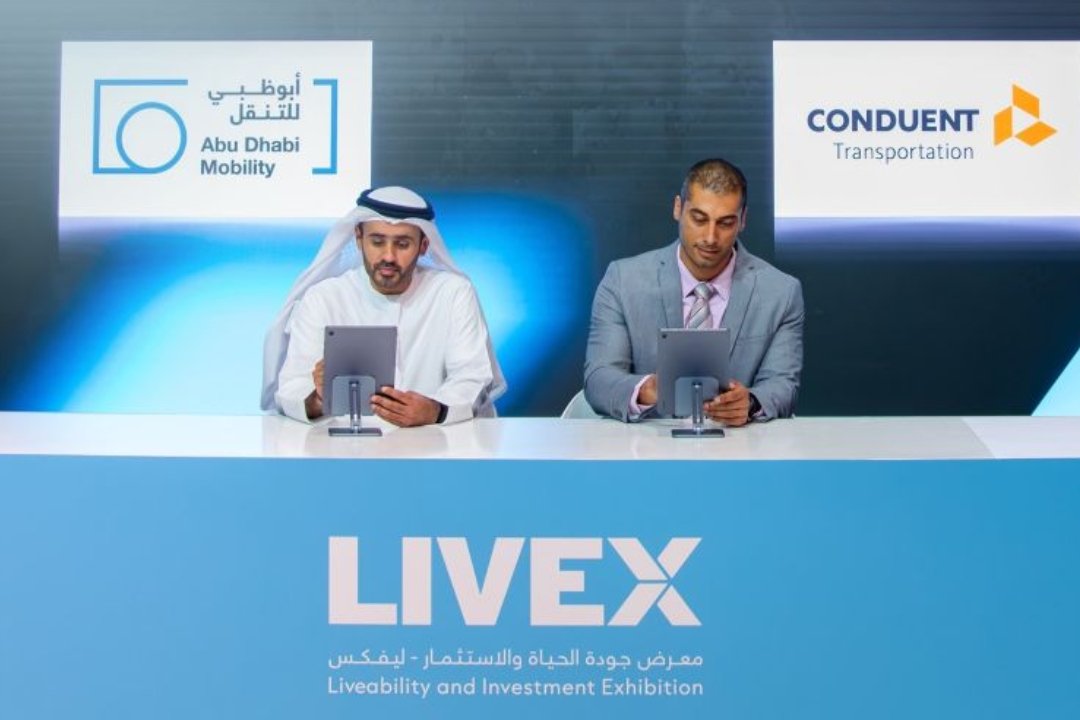
China’s robotaxi companies are also now exporting the technology rather than only running it at home. Baidu has partnered to build Abu Dhabi’s largest robotaxi fleet and secured a driverless trial permit in Dubai, opening its first overseas operations hub there in early 2026 to handle charging, maintenance, and fleet management. WeRide has already launched fully driverless commercial operations in Abu Dhabi through a major partnership with Uber and is targeting further European expansion, while Pony.ai has been road-testing across the Middle East and recently launched a joint autonomous mobility pilot programme in Luxembourg alongside Bolt and Stellantis. None of these companies existed as commercial operators a decade ago. All three are now closer to being global mobility technology exporters than domestic taxi alternatives.
The one place all this expansion becomes a physical-infrastructure story rather than a purely digital one is at the depot. A fleet running into the thousands cannot operate out of an ordinary taxi rank; it needs dedicated sites for charging, cleaning, and maintenance between shifts. This is why Baidu has begun building purpose-built operations hubs, branded Apollo Go Parks, at key locations, including its first overseas example in Dubai. It is a small but telling detail: even a technology this software-driven still needs somewhere physical to sleep.
Battery swapping: A new asset class in commercial real estate
NIO’s approach to EV energy is a genuinely different technical bet to the fast-charging model, and it has scaled further than almost anyone expected. However, for the property sector, it represents a rapidly expanding new asset class. The system lets a car drive in, have a depleted battery pack mechanically removed and a charged one installed in under two minutes, largely without human involvement. As of early August 2026, NIO hit a major physical infrastructure milestone by deploying its 4,000th dedicated Power Swap Station in China.
For developers, the physical footprint of battery-swapping infrastructure is becoming an increasingly relevant consideration. Depending on the generation of the station, NIO’s facilities have occupied roughly 45 to 60 square metres, with earlier configurations requiring around three parking spaces. The company has sought locations across major highways, urban centres, shopping areas and existing transport infrastructure, creating a new potential use for strategically located land and parking capacity.
NIO is also moving towards arrangements that can reduce the amount of infrastructure capital it needs to carry itself. Recent partnerships with state-owned transport and infrastructure organisations have included third parties taking ownership of physical swap-station assets while NIO continues to provide the technology, operations and technical management. For property owners and infrastructure investors, the model points to an emerging opportunity to repurpose suitable parking and transport sites for EV energy infrastructure, although the commercial structure varies by location and partner.
Advances in fast-charging batteries have narrowed the time advantage that battery swapping was originally designed to provide, but the technology is gaining momentum as CATL, the world’s largest battery manufacturer, expands its Choco-Swap ecosystem. Operated through its wholly owned subsidiary Contemporary Amperex Energy Service Technology, the network uses CATL’s modular Choco-SEB battery technology, allowing individual battery blocks to be exchanged rather than replacing an entire battery pack. CATL had built more than 1,470 Choco-Swap stations across 99 Chinese cities by April 2026 and is targeting more than 3,000 stations by the end of the year, with the wider network expected to reach nearly 190 cities. For commercial real estate investors, the expansion points to a growing demand for strategically located sites, particularly where transport infrastructure, electricity supply and existing commercial or parking facilities can support high-throughput energy services.
Ports run by algorithms: The macro-infrastructure transformation
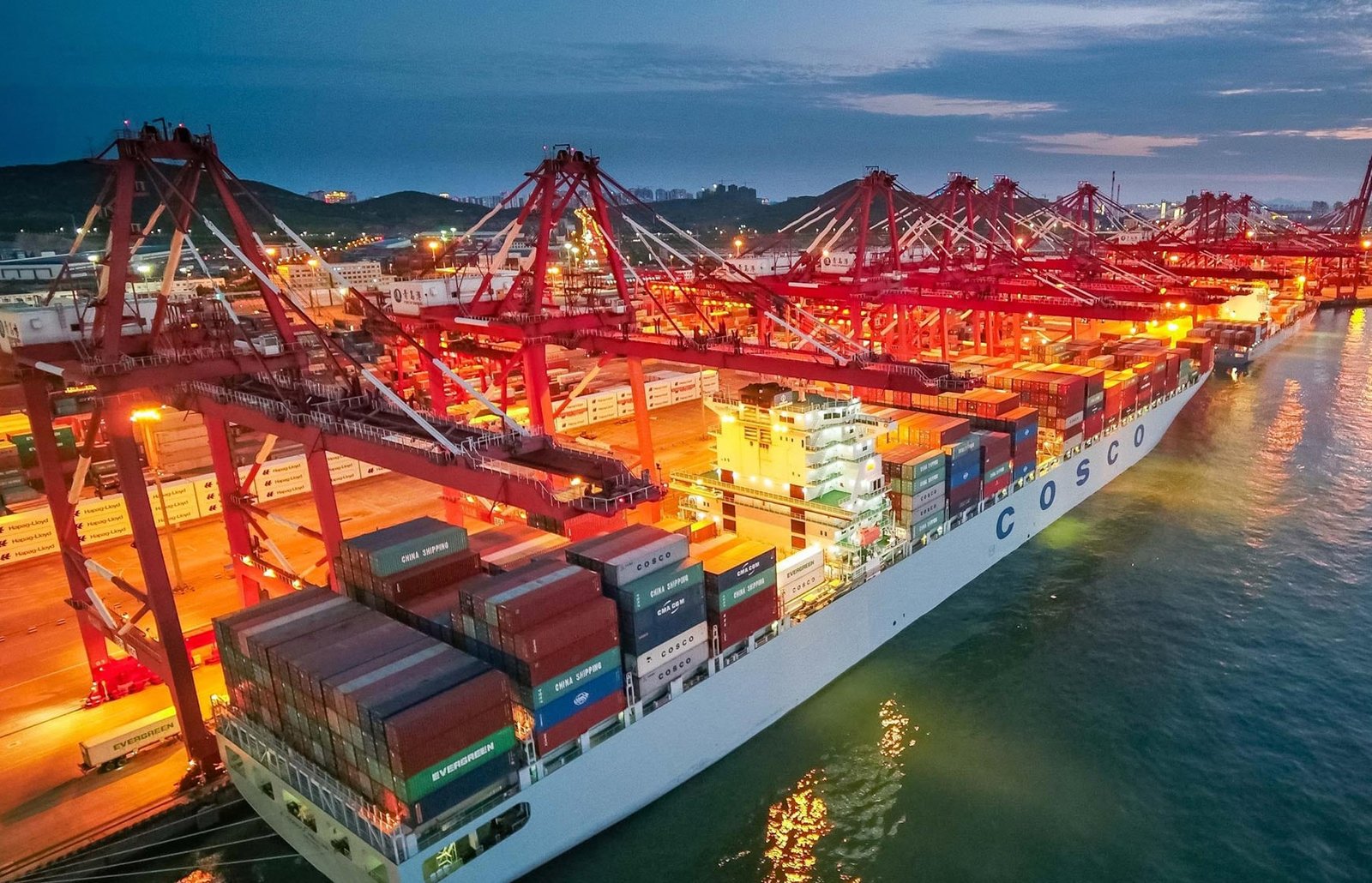
China’s most mature example of AI-driven transport automation is not on the road; it is at sea. According to China’s Ministry of Transport, the country now operates roughly 60 automated terminals, spanning major coastal port clusters from Bohai Bay and the Yangtze River Delta to the Guangdong-Hong Kong-Macao Greater Bay Area. The Qingdao New Qianwan Container Terminal, developed in phases, uses automated guided vehicles, remotely operated ship-to-shore cranes and a fully indigenous control system. It has set global productivity records, with single-crane handling rates reaching 62.62 TEUs per crane per hour, while overall operational efficiency is reported to be around 30 per cent higher than that of conventional terminals and berth-side labour requirements have been reduced by 80 per cent. In January 2026, the terminal took another step towards fully automated vessel handling with the commissioning of China’s first vacuum-based automated mooring system. Using vacuum suction units to secure vessels to the berth, the system can complete the mooring process in under 30 seconds, removing the need for workers to manually secure conventional mooring lines.
From a civil engineering and land development standpoint, this shift is beginning to reshape the physical footprint of port infrastructure. At Guangzhou’s Nansha Phase IV terminal, crane operators work from an intelligent control room hundreds of metres from the vessel, while automated guided vehicles and cranes handle containers across the terminal with no frontline personnel in the active operating area. The result is a port environment built around large, highly organised logistics yards, automated vehicle routes, charging infrastructure, extensive sensor networks, and centralised remote-operation facilities rather than conventional labour-intensive operations. The change is also creating an export market for Chinese smart-port technology. In 2026, Tianjin Port began preparing the first phase of a Chinese smart-port system for Saudi Arabia’s NEOM Port, including autonomous transport vehicles, automated charging infrastructure, and a transport dispatch platform—demonstrating how China’s automated port model is beginning to move into international infrastructure markets.
Redefining Hospitality Architecture and Guest Arrivals
The impact of autonomous transport extends directly into luxury hospitality and hotel real estate. In major markets from Dubai to the Guangdong-Hong Kong-Macao Greater Bay Area, hotel developers are increasingly considering autonomous drop-offs, EV charging and changing parking requirements as part of the property’s wider mobility strategy. Hospitality operators are no longer able to treat transport as an external consideration; the way guests arrive, vehicles are stored and charging is provided is becoming part of the property master plan.
On the West Artificial Island of the Shenzhen-Zhongshan Link, a 44-room robot-serviced hotel is being developed as part of a wider smart mobility environment, illustrating how hospitality assets can be designed alongside emerging autonomous transport infrastructure. For hotel investors, the significance extends beyond the arrival experience. Properties positioned within connected transport ecosystems may benefit from improved accessibility, more efficient use of arrival and parking areas and the ability to integrate mobility services directly into the guest experience.
Unlocking Value in Urban Parking Assets
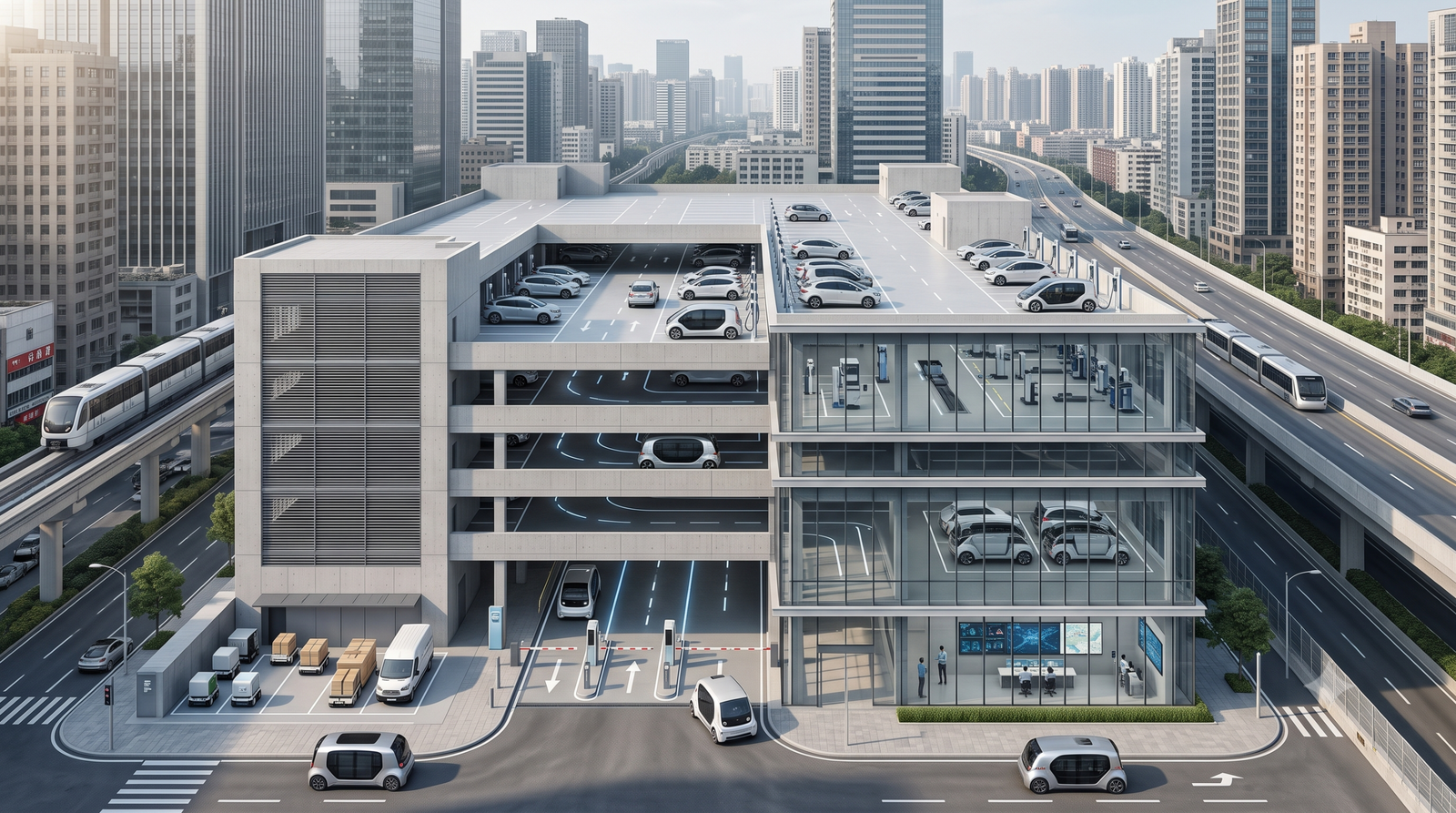
For commercial real estate owners, the growth of shared autonomous fleets could fundamentally change the role of urban parking. As vehicles spend less time parked for individual owners and more time operating continuously within shared fleets, some conventional parking facilities could be repurposed as charging hubs, automated maintenance centres, fleet depots and last-mile logistics staging areas.
This creates a potential second life for parking assets that are poorly utilised or constrained by changing urban mobility patterns. Rather than treating parking simply as static storage for vehicles, landlords can increasingly view these spaces as operational infrastructure supporting the wider mobility network. The most strategically located facilities, particularly those with suitable power capacity and access to major transport corridors, could become increasingly valuable as autonomous fleets scale.
What This Means for Property and Infrastructure Investors
The common thread across robotaxis, battery swapping, automated ports, hospitality design and urban parking assets is that China is treating each as a genuine infrastructure race. For real estate developers, hospitality groups and logistics investors, the fundamental shift is that physical space is increasingly following technological capability rather than simply dictating where technology can be deployed.
Each sector demands a distinct property response. Robotaxi networks require strategically located maintenance depots and operations parks. Battery swapping creates demand for compact, grid-connected urban and roadside sites. Automated ports rely on heavy-duty, sensor-rich logistics yards, while hotel assets are adapting arrival architecture and guest services for driverless transport. Meanwhile, multi-storey parking garages are being revalued and repurposed from static vehicle storage into active mobility, charging and logistics hubs.
For investors tracking the global built environment, these developments provide a clear indication of how transport technology can reshape demand for land and physical assets. As these automated systems expand globally, they will increasingly influence where development becomes viable, how commercial property must be repositioned and where the next generation of infrastructure capital will flow.



![[IRHM] logo](https://irhmagazine.com/wp-content/uploads/2025/08/IRHM-AWARDS-2025-1024x683.jpg)