

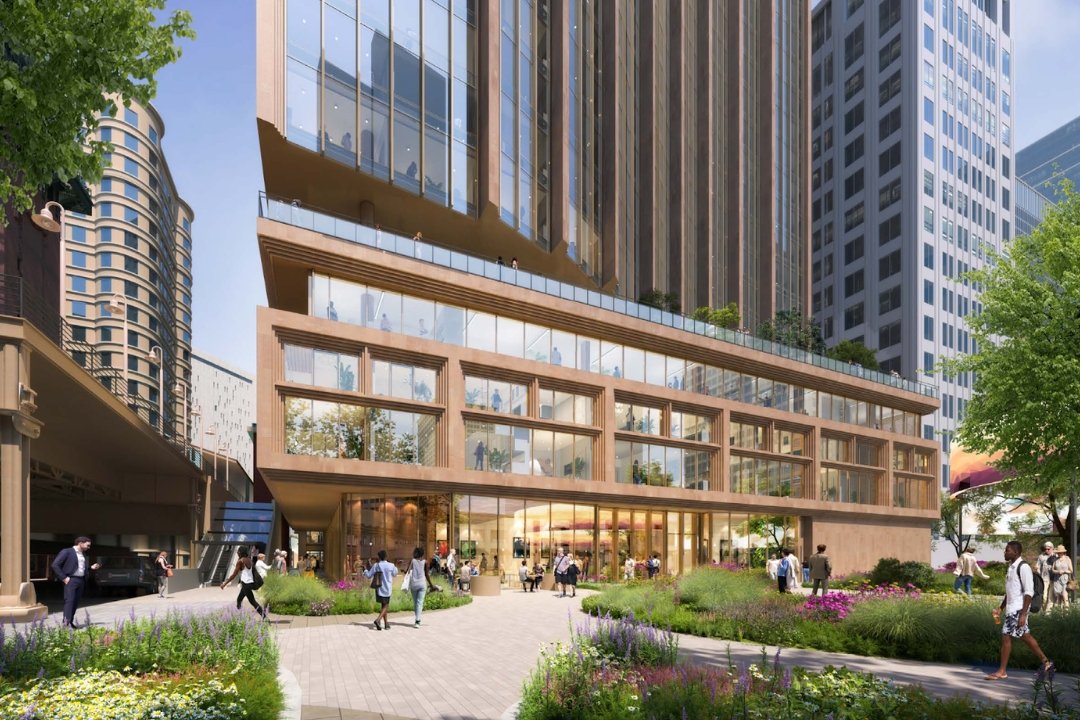

City officials have named a 25-storey mixed-use tower as the winning design for the redevelopment of a prime site in the Loop. The Chicago Department of Planning and Development (DPD) confirmed today that the property at 331-35 S. Plymouth Court will be transformed by the $162.2 million ACōDA project.
The development, led by DL3 Realty, is set to provide 300 mixed-income apartments, including 60 units designated as affordable housing. The plans for the site also feature ground-floor shops, a restaurant, co-working facilities and specialised live-work lofts.
Strategically located near several CTA rail lines, the project is designed as a transit-oriented hub and will include 60 indoor parking spaces. As part of the deal, the developers have committed at least $1.5 million to upgrade the adjacent Pritzker Park. These improvements include a new space for performances, better street lighting and various public art installations.
“As we continue to confront the housing shortage head-on, I’m thrilled the City is supporting this 300-unit project that includes 60 much-needed affordable homes for the Loop,” Mayor Brandon Johnson said. “The investment will empower people from all walks of life to live in the beating heart of our city, extending job opportunities as well as access to public transit and Chicago’s numerous cultural and community amenities.”
The 0.35-acre plot currently houses a municipal car park and vacant land. The City intends to sell the site for its market value of $3.8 million.
DPD Commissioner Ciere Boatright noted that the project fits with wider plans to refresh the southern end of the State Street shopping area. “In addition to bringing 300 mixed-income units to a key transit node downtown, the project aligns with Central Area Plan strategies to revitalize the southern part of the State Street shopping corridor with new public-private investments,” she said.
Alderman Lamont Robinson added: “This exciting proposal will reactivate one of the Loop’s most underutilized sites with mixed-use amenities that reflect long-established neighborhood development goals.”
The ACōDA proposal was chosen from three competing bids. The minority-led team behind the project includes Perkins & Will as architects, alongside construction firms Power and UJAMAA. The City may provide up to $5 million in grants to help cover costs.

![[IRHM] logo](https://irhmagazine.com/wp-content/uploads/2025/08/IRHM-AWARDS-2025-1024x683.jpg)