
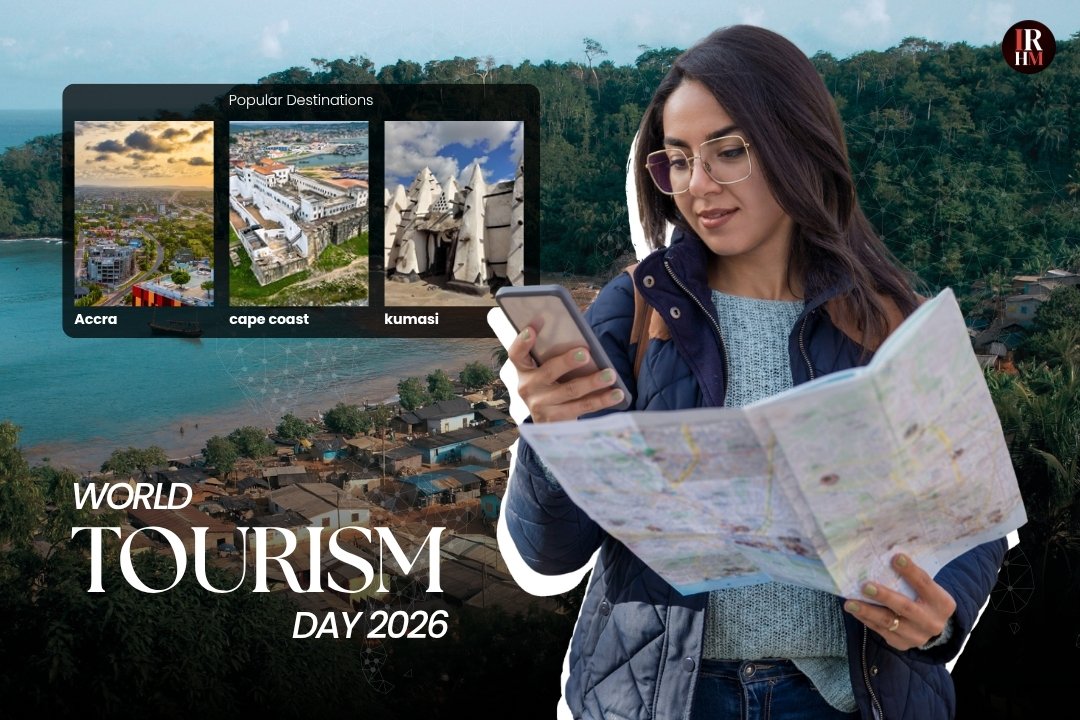

World Tourism Day, marked every year since 1980, was observed on Sunday 27 September under the theme “Digital Agenda and Artificial Intelligence to Redesign Tourism”, with El Salvador as host country. UN Tourism’s own proposal for the theme said it would explore how AI can enhance customer experiences, improve operational efficiency and enable sustainable tourism.
In his message, UN Secretary-General António Guterres said AI is changing how travellers choose destinations, how the industry operates and how travel experiences are designed. It can strengthen small businesses, improve services and create new opportunities. UN Tourism’s Secretary-General, Shaikha Al Nuwais, said in her message for the day that, managed well, AI can help build a more efficient and resilient sector, but that this cannot be taken for granted. Left unaddressed, she warned, the changes risk widening the gap between those shaping the new digital rules and those simply expected to follow them.
Guterres also added a warning. Left unchecked, AI can funnel tourists to the same few places and platforms, leaving many worthwhile destinations behind. Technology, he said, must serve humanity.
That warning is the most useful part of the theme. Most coverage of AI in travel asks what the technology can do. Guterres asked who it does it for.
Two sides of the same technology
The theme covers two different things. One is what travellers see when they ask a machine where to go. The other is what destinations do with data behind the scenes.
On the first, the evidence pulls in two directions. Klook’s cofounder Ethan Lin told the Fortune Leaders Forum in Macau this month that overtourism is a problem of concentration rather than volume, and that AI can help diversify traffic towards lesser-known places. A Klook survey found 57% of Gen Z and millennial travellers in Asia had used AI to find new destinations or experiences. A Mastercard economist on a separate panel said company data shows people who pay for AI subscriptions are more likely to visit places off the beaten path.
Researchers are more cautious. One study collected 420 recommendations from ten AI systems and found the outputs repeatedly converging on a narrow set of iconic and semi-iconic places, an effect its authors call digital overtourism. A smaller study of ChatGPT found it favoured established hubs such as Paris, Rome and New York, with rural villages appearing less often, though it did not measure what real travellers did next.
Commercial pressure adds a further worry. The Global Sustainable Tourism Council argued in its commentary for the day that AI answers are becoming commercial space, and once visibility can be bought, the largest brands will buy it. A start-up called Drifter, which sells visibility tools to destinations, told PhocusWire that without such tools, AI recommendations will settle around the same well-known names, making it harder for independent hotels and emerging destinations to break through. The company has something to sell, so weigh that claim accordingly.
The trade press describes a more mixed picture for small hotels. The Traveler, summarising industry research, says independents can win disproportionate visibility when their data is accurate and their brand appears in several trusted sources. It also reports that one research provider, which it does not name, found more than a third of hotel websites in a multi-country study had no structured data markup, the tags that help AI systems confirm a hotel’s basic facts.
On the second side, destinations are testing digital twins, virtual copies that let planners try out crowd measures before applying them. A study of four Spanish destinations combined a survey of 1,286 tourists with stakeholder interviews. Overtourism was the biggest concern, and Barcelona respondents saw promise in real-time monitoring of visitor density at Sagrada Familia and Park Güell. The same research found that governance capacity, equity concerns and readiness shaped how stakeholders judged the technology. In other words, a tool can exist and still be out of reach for the places that need it most.
Case Study: One Request, Five Tools
To see what discovery looks like at the scale of one trip, we conducted a small test on 28 September 2026. We asked ChatGPT, Gemini, Google AI Mode, Grok, and Claude to plan a quiet, local, heritage-focused trip to Ghana for a traveller who had already seen Accra and Cape Coast and wanted to support small businesses.
The shortlists overlapped significantly:
- 4 of 5 tools recommended the Tafi Atome Monkey Sanctuary in the Volta Region.
- 4 of 5 named the cloth-stamping village of Ntonso near Kumasi.
- 4 of 5 suggested the stilt village of Nzulezo.
While these are authentic, high-value cultural sites, the test highlights how quickly different systems converge on identical recommendations.
Ownership labels proved harder to verify. Google AI Mode described Meet Me There Eco Lodge on the Volta coast as “completely run by local staff.” The lodge employs local staff and operates as a non-profit tied to Dream Big Ghana (an NGO registered in both Ghana and the UK). However, a 2023 profile credits its origin to a founder from the UK who has managed operations. Whether the tool generated the description autonomously or repeated indexed copy remains unconfirmed. ChatGPT, by contrast, explicitly noted it could not verify whether its guesthouse picks were strictly family-run.
Who shapes what comes next
Guterres said tourism workers, local communities and emerging destinations must help shape what comes next, which requires investing in digital skills and widening access to technology. That is a job for training as much as for technology.
UN Tourism has already chosen its next step. World Tourism Day on 27 September 2027, hosted by Cabo Verde, will carry the theme “Transforming Tourism through Education”, highlighting the role of education, skills and human capital and mobilising youth, academia and training institutions. Read together, the two themes make a sequence. Technology comes first, and then the people who will run it.
For hospitality institutes, the practical question is what to teach. Checking how an AI tool describes a business, keeping listings consistent and questioning a confident answer are not glamorous skills. They may decide whether a small operator is found.
A traveller asks a machine where to go. The redesign this year’s theme calls for will be judged by who is in the answer.




![[IRHM] logo](https://irhmagazine.com/wp-content/uploads/2025/08/IRHM-AWARDS-2025-1024x683.jpg.webp)