


“The same greenfield capital fuelling rapid expansion can be steered toward lower-carbon developments if the financial case is made plain enough.”
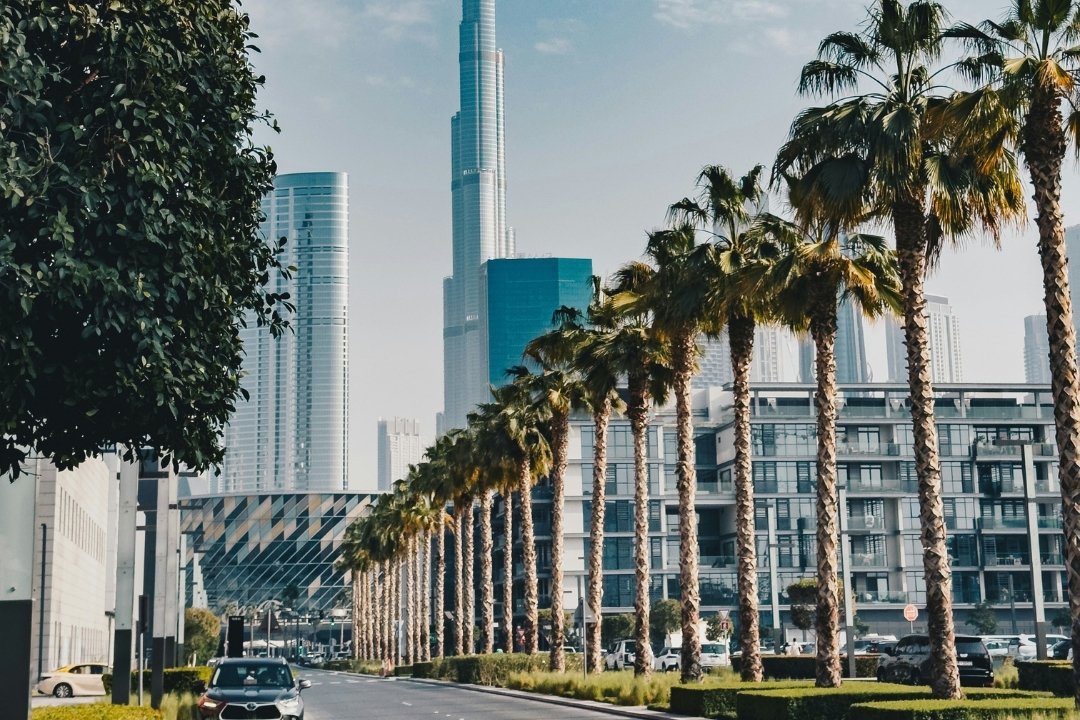
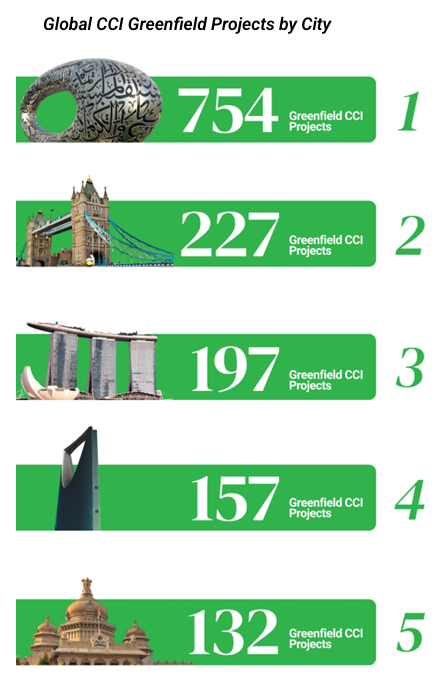
For the fourth consecutive year, Dubai has topped the global ranking for greenfield foreign direct investment (FDI) in the cultural and creative industries (CCIs). Among 233 cities tracked, Dubai attracted 754 new projects in 2025, ahead of London (227), Singapore (197), Riyadh (157) and Bengaluru (132). Those projects generated 19,304 new jobs and pulled in $3.756 billion in capital, according to Financial Times Ltd.’s fDi Markets data, placing Dubai second globally for capital inflows even as it led on project count.
This is a notable result, but it raises an awkward question for urban planners and investors alike. Greenfield, by definition, means building on undeveloped land or replacing existing structures with new ones. As cities race to construct the studios, media hubs and innovation campuses that a modern creative economy needs, how do they do so without taking on the carbon, energy and resource costs that come with ground-up construction?
Dubai’s win is a useful case study for that tension.
Why Dubai Became Number One
Dubai’s dominance is not accidental. It is the product of a long-running regulatory and infrastructure strategy.
Ownership and residency reform. Rules allowing 100% foreign business ownership in most sectors, simpler licensing and long-term Golden Visas have removed barriers that once pushed international creative firms toward joint-venture structures or away from the region altogether.
Purpose-built clusters. Free zones such as Dubai Design District (d3), Dubai Media City and Dubai Internet City bring together talent, supply chains and sector-specific infrastructure in single, walkable districts, cutting down the effort of assembling a creative ecosystem from scratch.
Government planning. Dubai’s Creative Economy Strategy, launched in 2021, set out to double the sector’s GDP contribution from 2.6% to 5% and more than double the number of creative companies and creators by 2025. It sits alongside the wider Dubai Economic Agenda (D33), launched in 2023, which aims to double the size of the emirate’s overall economy by 2033. Together, they give investors confidence that infrastructure, permitting and incentives will keep pace with capital.
Sectoral shift. The data points to a wider change in Dubai’s creative economy, moving away from traditional cultural sectors toward digital content, creative technology, AI and data-driven services. These sectors tend to be lighter on physical footprint per dollar invested, even as the number of new facilities keeps rising.
The Greenfield Dilemma
Here is the tension: 754 new projects in a single year, in a single city, is not a small figure. It amounts to a construction boom. Compare that with mature creative capitals like London or Singapore, which lean more on adaptive reuse, converting warehouses, former industrial sites or ageing office stock into creative space rather than building anew. Adaptive reuse preserves embodied carbon (the emissions already spent constructing the original building) and avoids the resource cost of fresh concrete, steel and glass.
Dubai’s growth model, by contrast, runs on net-new development. That delivers speed and scale, which matters when a market is trying to absorb thousands of relocating firms and workers in a short window. But it also means Dubai’s environmental accounting has more work to do. Every new district built to attract media, design or AI companies adds embodied carbon before a single employee sets foot inside it. And once occupied, buildings in a Gulf climate face cooling loads that can dwarf the energy profile of a similarly sized building in London or Singapore.
The real question for Dubai is not whether to keep building. The FDI figures make clear that greenfield delivery is central to its edge over rivals. The question is how to stop that construction volume translating into a matching rise in lifecycle emissions.
Sustainable Strategies in Hot-Climate Growth Markets
Dubai has not ignored this tension and its own regulatory framework offers part of the answer.
Green building codes. Al Sa’fat, Dubai Municipality’s green building rating and evaluation system, was approved in 2016 and updated in October 2020 to require a minimum Silver rating for all new building permits, with higher Gold and Platinum tiers available across energy, water, materials and indoor-environment criteria.
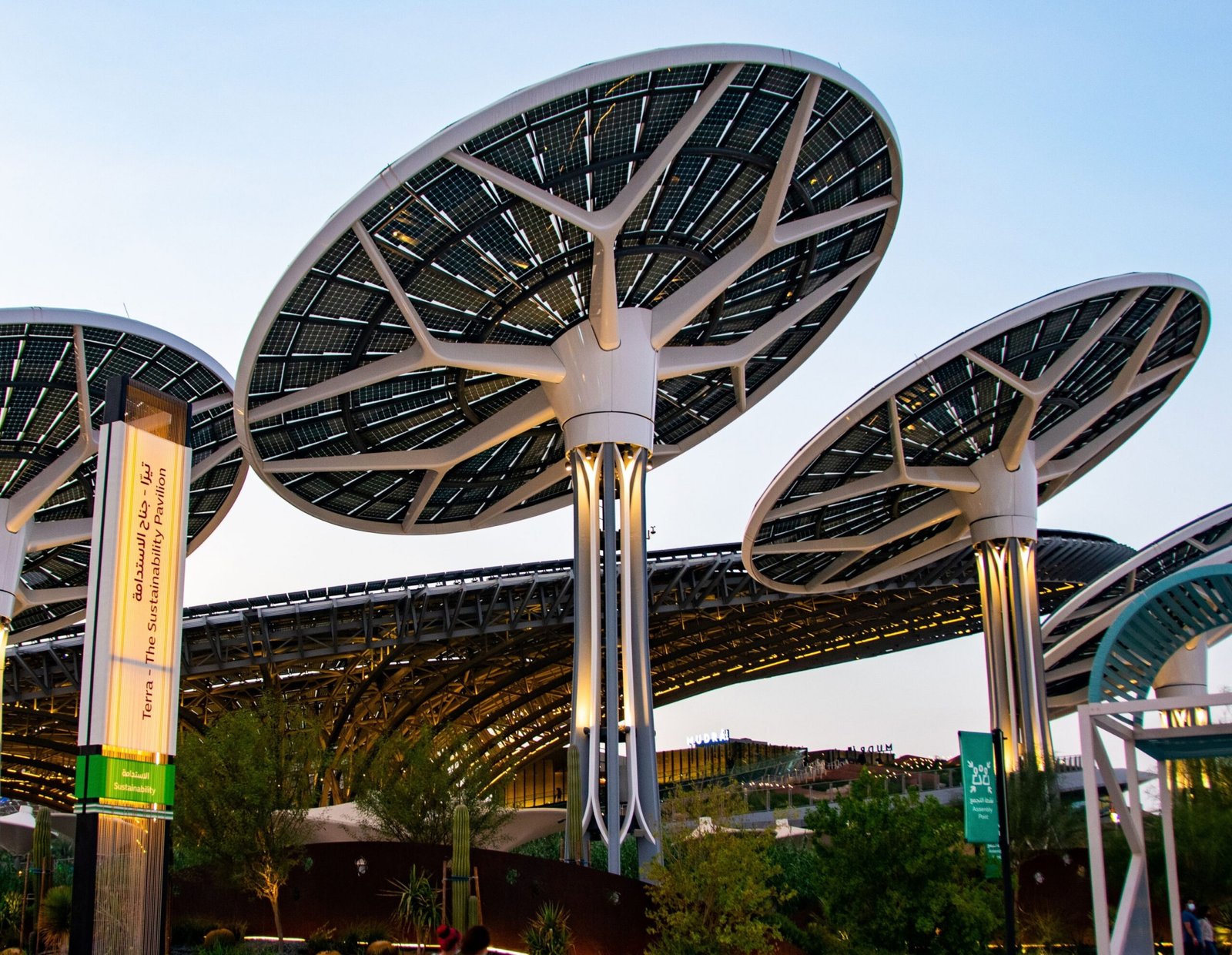
Passive design meets smart systems. Traditional Gulf architecture features: deep-set windows, wind towers, and shaded courtyards are being brought back alongside high-performance glazing, solar shading, and AI-driven HVAC controls. The aim is to cut the raw cooling load before adding more energy-hungry equipment on top, rather than relying only on mechanical efficiency gains.
PropTech and building management. New creative districts increasingly build in smart metering, automated building management systems and real-time energy monitoring from the design stage. This kind of infrastructure is far cheaper to install in a greenfield project than to retrofit later, which is arguably greenfield development’s one real advantage over adaptive reuse.
Al Sa’fat is also tied directly to Dubai’s Clean Energy Strategy 2050 and the UAE’s wider Net Zero 2050 commitment, giving individual building certifications a clear link to national climate targets rather than leaving them as a standalone box-ticking exercise.
Linking Capital to ESG Performance
The direction among global institutional investors is clear. Site selection in the creative and digital economy is increasingly tied to demonstrable ESG performance, not just tax and ownership incentives. Green-certified buildings in Dubai already command rental premiums of roughly 7% to 11%, with faster leasing and lower vacancy in commercial real estate, evidence that the market, not just regulators, is pricing sustainability into property decisions.
That creates a useful incentive loop for cities in Dubai’s position. The same greenfield capital fuelling rapid expansion can be steered toward higher-certified, lower-carbon developments if the financial case is made plain enough. Cities that fail to make that case risk losing the next wave of creative-economy investment to markets that can prove both growth and environmental discipline.
Building the Benchmark
Dubai’s number one ranking is a real achievement in regulatory design and economic planning, but it also puts the emirate at the centre of a wider test case. Rapid, greenfield-driven growth and credible sustainability commitments do not fit together automatically. They have to be actively reconciled through building codes, passive design and market incentives working together. If Dubai’s Al Sa’fat framework and its emerging green-premium rental market keep pace with its FDI growth, the city has a real chance to set the benchmark for what a fast-growing, hot-climate creative hub can look like when built with care rather than simply built fast.