



As Asia’s cities grow hotter and energy costs rise, architects are drawing on passive cooling techniques developed over centuries in the Middle East. The numbers suggest this shift is no longer just good practice. It is fast becoming a commercial and regulatory necessity.
Keeping cities cool has become one of the main challenges for urban planners worldwide. Across Asia, where rapid development meets persistently high temperatures, architects are under growing pressure to cut dependence on energy-intensive air conditioning. Many are now looking to principles tested for centuries in the Middle East, where buildings were designed around climate long before mechanical cooling was available.
Rather than copying historic architecture, designers are working from the logic behind it. Passive cooling, shading, thermal mass and considered urban layout are increasingly treated as practical tools for cities facing more frequent extreme heat events. The transfer is not straightforward, though. Middle Eastern techniques were built for dry heat, while much of Asia deals with humid heat. That difference affects how far any borrowed principle can go without adaptation.
Dense cities are trapping more heat
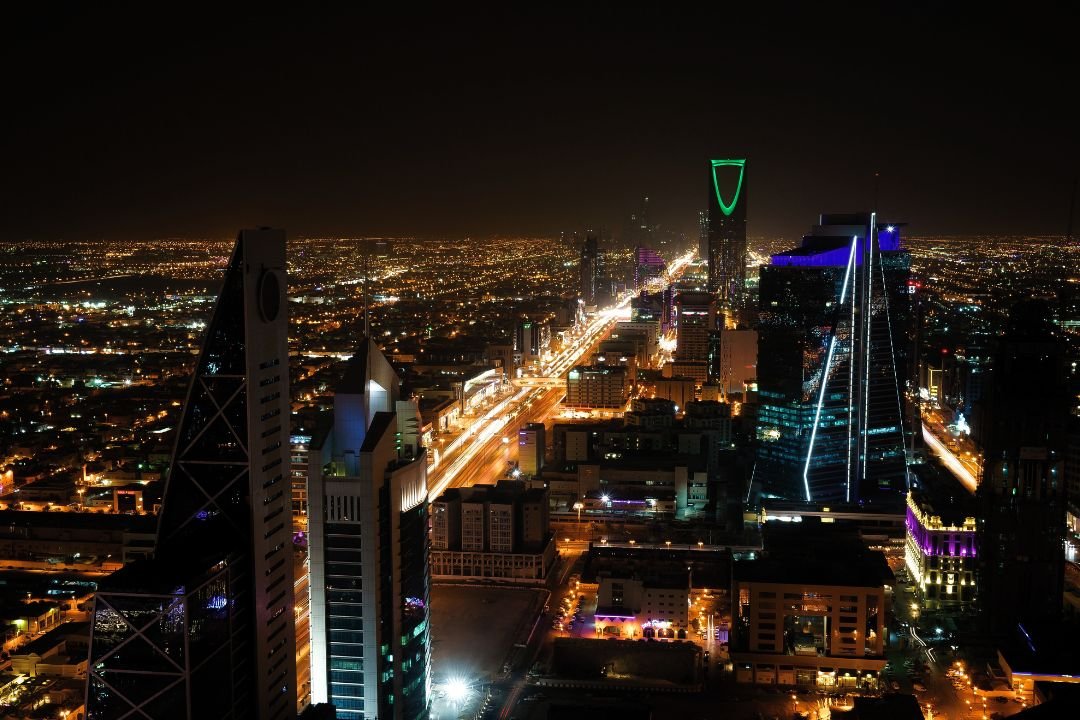
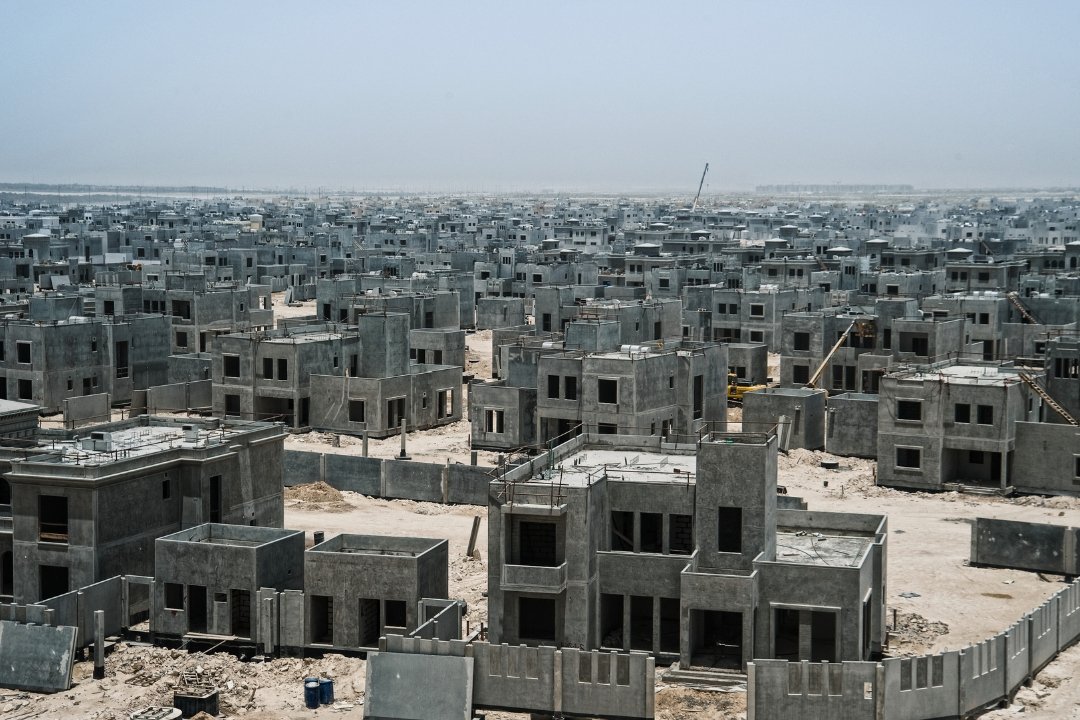
The urban heat island effect is making conditions worse across Asian cities. Dense concentrations of concrete, asphalt and glass absorb solar radiation during the day and release it slowly overnight, keeping temperatures elevated long after sunset. Research has consistently linked this effect to higher energy demand and increased pressure on public health infrastructure in cities including Bangkok, Manila and Ho Chi Minh City.
Modern buildings often add to the problem. Fully glazed towers trap heat, while sealed interiors depend heavily on mechanical cooling. Regulators are beginning to respond. Singapore’s Green Mark framework uses envelope thermal transfer value limits that effectively constrain excessive glazing, and similar window-to-wall ratio controls are gaining ground across the region. The waste heat expelled by cooling systems raises outdoor temperatures further, creating a feedback loop that is difficult to break. Air conditioning already accounts for between 40% and 70% of energy consumption in most commercial buildings in Singapore, according to the Building and Construction Authority (BCA), and that figure is expected to climb across the wider region as temperatures rise.
Wind towers and thick walls: the original toolkit
Long before electricity, builders across the Middle East designed structures that worked with local climate rather than against it. Passive cooling was not an optional feature. It was a basic requirement for buildings to be liveable.
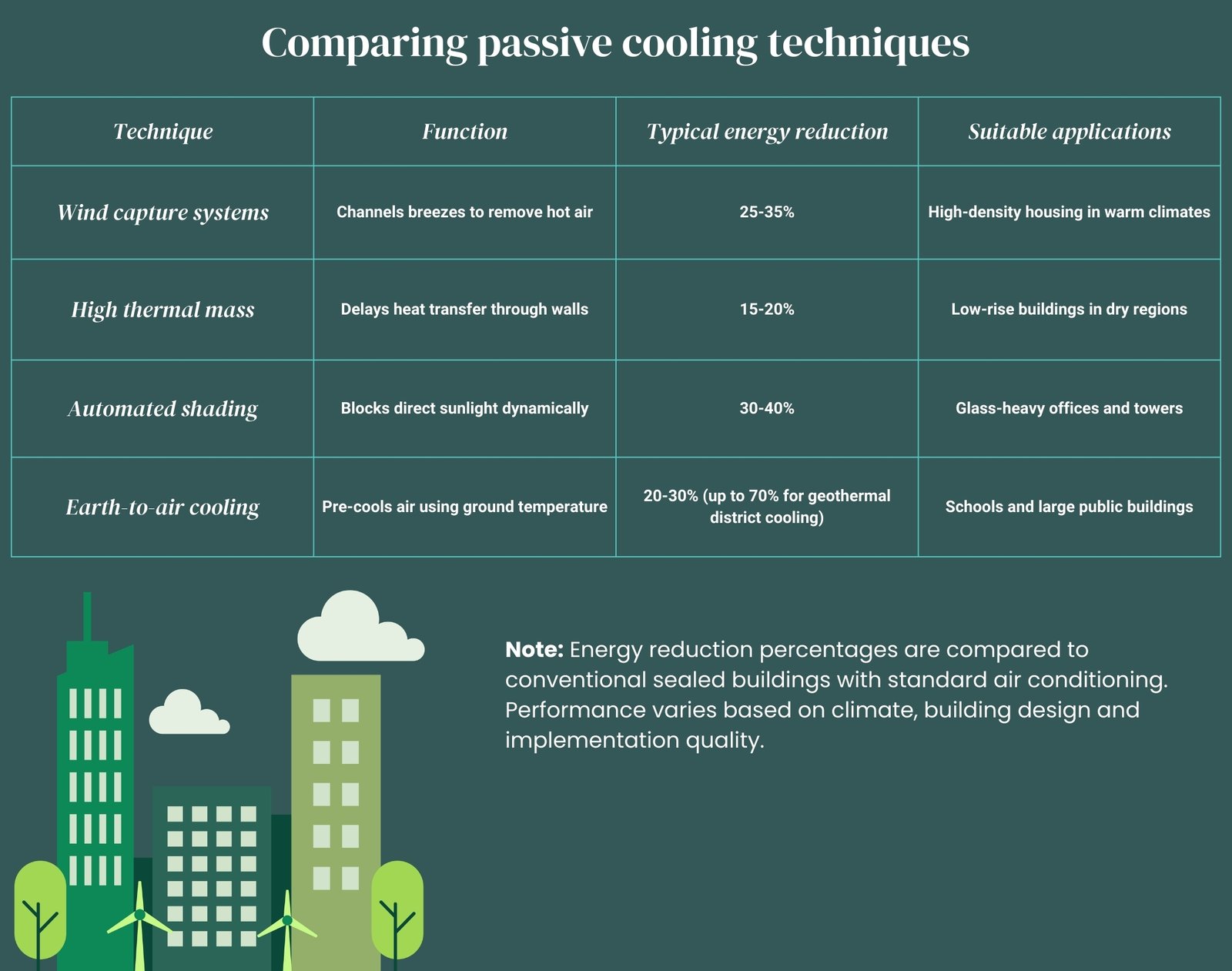
The wind tower, known as a malqaf in Egypt and a barjeel in the Gulf, is one of the most studied examples. These vertical shafts capture breezes at roof level and direct cooler air into living spaces while hot air escapes through separate openings. Paintings found near Luxor place their use in Egypt as far back as 1300 BC. Research into modern windcatcher designs has found that well-configured systems can reduce indoor temperatures significantly in dry conditions. In Egypt, where air conditioning accounts for around 60% of peak electricity demand, interest in reviving this approach has grown among architects and policymakers.
Thermal mass is another core principle. Thick stone or earthen walls absorb heat during the day and release it slowly overnight, a property known as thermal lag, which reduces the range of temperature change indoors. In the Al Bastakiya district of Dubai, this worked alongside narrow streets and shaded walkways to create cooler conditions at street level.
Shading devices played an equally important role. Lattice screens known as mashrabiya filtered direct sunlight while allowing air to pass through. Courtyards acted as thermal buffers, drawing hot air upward and promoting circulation throughout a building.
These ideas are now being updated with modern materials and computer modelling. Phase-change materials, advanced concrete mixes and computational fluid dynamics (CFD) modelling allow architects to improve thermal performance even in multi-storey buildings. The same materials are also beginning to appear in cool roof systems across Asia, offering the thermal lag benefits of thick stone without the structural weight. Generative design tools, which use algorithms to model shading geometry, are being applied to elements like the mashrabiya to find the best balance between blocking direct solar gain and preserving indirect daylight. Automated shading systems can now track the sun’s movement throughout the day. Studies show well-designed shading systems can reduce cooling demand in heavily glazed buildings by 30% to 40%.
Gulf states test old ideas at scale
The Gulf Cooperation Council region has become a testing ground for climate-responsive design at urban scale. Masdar City in Abu Dhabi is the most cited example, combining principles drawn from traditional Arabic urban planning with modern building technology.
Buildings in Masdar are arranged to create shaded streets and wind corridors, while the narrow proportions of public spaces limit direct solar exposure. The city’s central area sits on a seven-metre elevated podium and is oriented to capture prevailing desert winds, producing outdoor temperatures roughly 10 degrees Celsius lower than those recorded in central Abu Dhabi. According to the city’s 2024 ESG report, buildings across the development use 40% less energy than the Abu Dhabi average through passive design measures. That same year, Masdar reported a 22.7% reduction in energy use intensity compared to the ASHRAE 90.1 baseline, a well-established international standard that already sets a demanding floor for building energy performance, putting it well ahead of what the standard requires.
The city has faced criticism over cost, pace of development and the gap between its original zero-carbon targets and current output. By 2023 it housed around 15,000 people, a fraction of the 45,000 to 50,000 originally planned. But its value lies less in meeting those early targets and more in producing real-world data on how urban form, rather than mechanical systems alone, can improve thermal comfort at scale.
Hybrid systems combining wind towers with earth-to-air heat exchangers, which use the stable temperature of the ground to pre-cool incoming air, have also been tested in the region. Geothermal cooling in particular has attracted attention. Research indicates it can reduce cooling energy needs by up to 70% compared with conventional air conditioning, and the technology now contributes to district cooling within Masdar City.
Asian cities adapt the principles
Across Asia, architects are not replicating Middle Eastern buildings. They are applying the same climate logic within local contexts and with local materials.
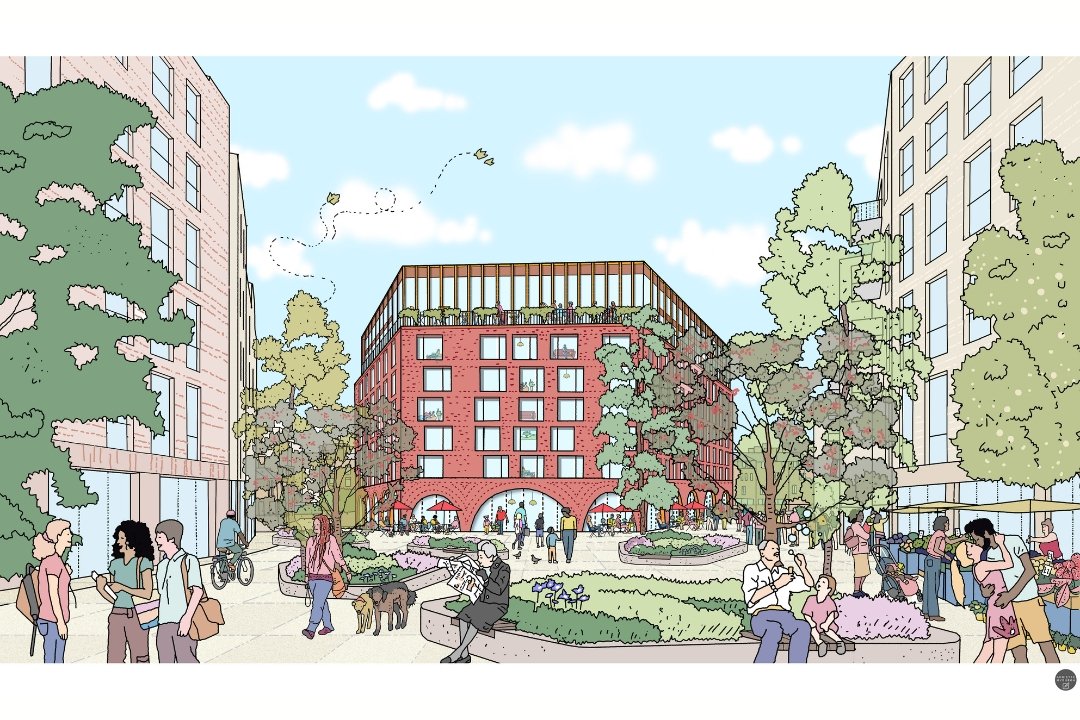
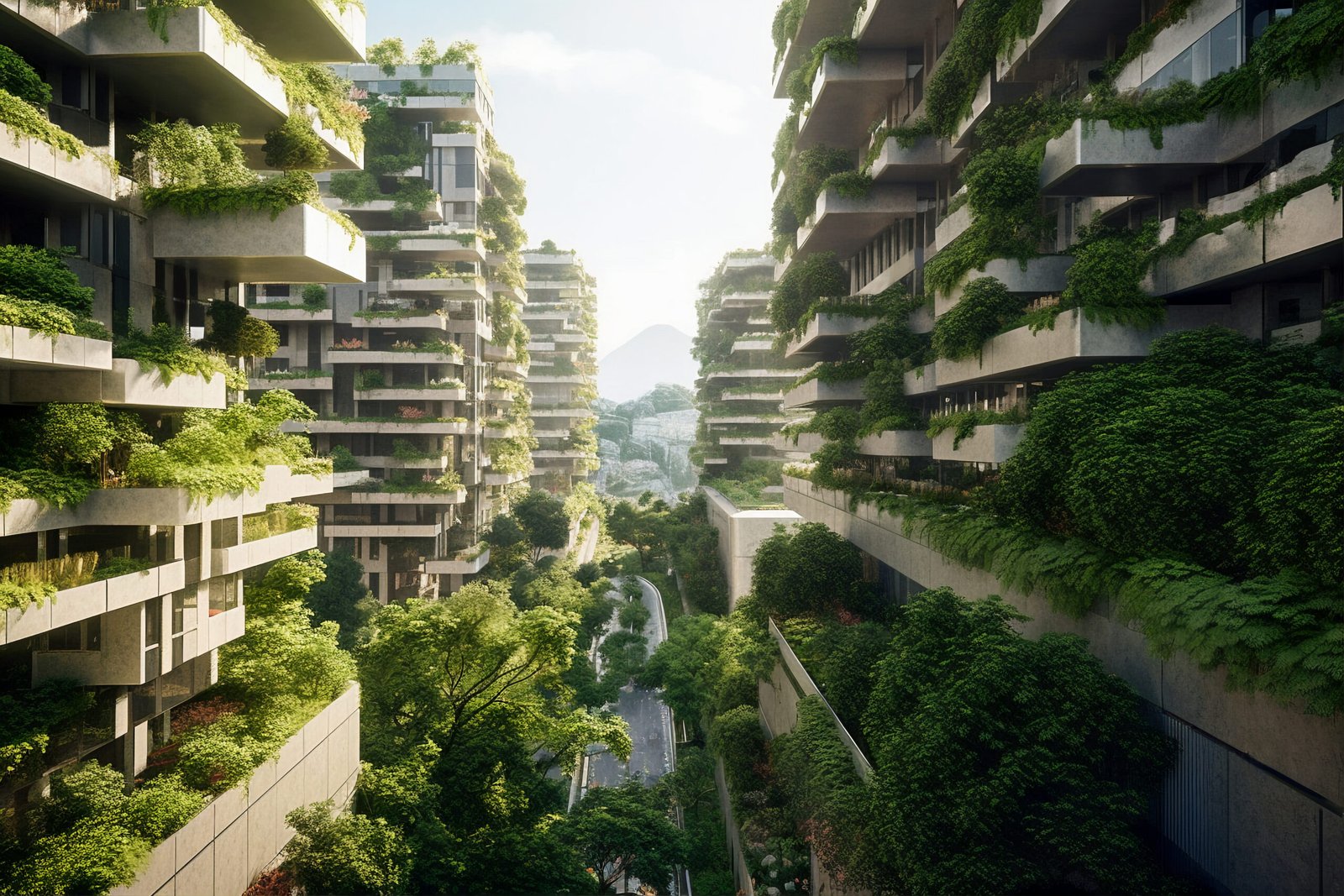
In Singapore, Kampung Admiralty, completed in 2017 and awarded World Building of the Year at the 2018 World Architecture Festival, is one of the clearest examples. Designed by WOHA Architects for the Housing and Development Board, the project brings together elderly housing, healthcare facilities and community spaces in a single stacked block. Deep overhangs, layered terraces and open-air circulation promote shading and cross-ventilation using the same logic as shaded streets and courtyards found in traditional Gulf settlements.
The project achieved a 13% reduction in cooling energy through its natural ventilation system and reached a Green Plot Ratio, the measure of total vegetated area relative to plot size, of 125%. This means the total area of greenery across the ground, green roofs and green walls exceeds the plot area by a quarter. The development’s water management system, including rainwater harvesting and bioswales, conserves more than 4 million litres of tap water per year.
Bangkok’s The Met, also designed by WOHA, applies similar thinking at high-rise scale. The tower is separated into slender blocks with open voids between them that function as vertical courtyards, allowing wind to move through the building. Shaded facades reduce solar gain, allowing many apartments to rely on natural ventilation for much of the year rather than continuous air conditioning.
In Bali, the Green School campus shows how these principles can work in a high-humidity tropical environment. Large roof overhangs, open-sided teaching spaces and careful orientation allow hot air to rise and escape, reducing the need for mechanical cooling despite conditions very different from the dry Middle Eastern climates where many of these strategies were first developed.
The common thread across all these projects is an emphasis on limiting heat build-up in the first place, rather than compensating for it afterwards. There is also a clear design difference between the two traditions. Middle Eastern buildings rely primarily on mass, using thick walls that absorb and delay heat. Asian adaptations tend to rely on porosity, using openings, voids and permeable facades to keep air moving through a building. The climate logic is the same; the visual language is not.
WOHA has since taken these ideas back to the Gulf. The practice designed the Singapore Pavilion at Dubai Expo 2020, a structure that used layered planting, shading and natural ventilation to function as a self-cooling environment in the desert. It was a clear example of the knowledge exchange now running in both directions.
Why developers are paying attention
For developers and asset managers, climate-responsive design is not just an environmental consideration. Buildings that stay cooler without mechanical intervention carry lower operating costs and require smaller, cheaper cooling plant. In markets where energy prices are volatile, that reduces long-term liability and supports asset value over time. There is a growing focus on thermal resilience, which refers to a building’s ability to remain liveable during a power outage or grid stress event. As heatwaves continue to test Asian energy infrastructure, assets that can maintain safe indoor temperatures without continuous mechanical cooling are increasingly valued by occupiers and insurers alike.
The financial case is becoming clearer. Green-certified buildings in Singapore are currently achieving rental premiums of between 4% and 9% over comparable non-certified stock, according to market data from major commercial real estate advisers. On the other side of that, investors are beginning to apply what the industry calls a “brown discount” to buildings that fall short of green standards, pricing in the cost of future retrofits and the risk of stranded assets as regulatory requirements tighten.
There is also a regulatory dimension that is becoming harder to ignore. Singapore’s Green Building Masterplan, now in its fourth edition and known as the “80-80-80 by 2030” framework, sets three parallel targets: 80% of all buildings by gross floor area to hold Green Mark certification by 2030; 80% of new developments to meet Super Low Energy standards from 2030; and 80% improvement in energy efficiency against 2005 levels for best-in-class buildings by 2030. New buildings seeking Green Mark certification must already demonstrate at least 50% improvement in energy performance compared to 2005 standards. As of 2025, around 60% of Singapore’s buildings had been greened under the scheme, covering more than 146 million square metres of gross floor area.
Buildings that already perform well against these benchmarks are less likely to need costly retrofits when standards tighten further, which is a significant consideration for investors with long hold periods.
Challenges remain, particularly in humid climates. Passive cooling strategies developed for hot, dry Middle Eastern conditions do not translate directly to Southeast Asia’s year-round humidity. Evaporative cooling loses much of its effectiveness when relative humidity is consistently high, and natural ventilation strategies require careful design to work in dense urban settings. Upfront costs for implementing these techniques are also a factor, though these have fallen as supply chains and local expertise have developed.
No going back to glass boxes
The case for building sealed glass towers in hot climates is getting harder to make, both financially and environmentally. Architects and developers are being asked to treat climate as a design consideration from the start, not a problem to be dealt with later through larger cooling plant.
The lessons from the Middle East are not about copying historic forms. They are about understanding how building shape, materials and urban layout can reduce heat before mechanical systems are needed. By applying those principles to local conditions, Asian cities have an opportunity to build stock that performs better over its full lifespan.
As temperatures continue to rise and regulatory requirements tighten, the buildings most likely to hold their value will be those that get ahead of those changes rather than wait to retrofit.
![[IRHM] logo](https://irhmagazine.com/wp-content/uploads/2025/08/IRHM-AWARDS-2025-1024x683.jpg)