



“We model how people actually behave in the physical world—how they move, congregate, and choose spaces—and use AI to predict demand before capital is deployed.”
As cities face mounting pressure from urbanisation, sustainability demands and changing human behaviour, new approaches to real estate decision-making are emerging. Natalia Rincón-Eriksson, an architect, computer scientist and co-founder of CHAOS, is at the forefront of this shift. With experience spanning architecture and senior technology roles at IBM and EDS, she has spent nearly a decade bridging human experience and data-driven urban development.
Based in Helsinki, CHAOS has evolved from a citizen engagement app into an AI platform that transforms fragmented urban data into actionable intelligence for developers, investors and cities. Following a recent €2 million funding round, the company is now expanding into the Nordics and DACH regions.
In this Q&A, Rincón-Eriksson discusses the evolution of CHAOS, trust and transparency in AI-led decision-making, sustainability beyond symbolic measures and the realities of leading innovation in the traditionally conservative real estate sector.
International Real Estate & Hospitality Magazine: What was the moment that made you realise you needed to create CHAOS to change how cities are built?
Natalia Rincón-Eriksson: It all started from personal experience. As an architect who’s lived and worked across different countries, I kept seeing the same gap – cities and developments were being planned around buildings, not around people. Real estate has always said ‘location, location, location,’ but what truly defines a location is the life and demand created by its people.
There was no tool, no system that could capture this human perspective. Architects were doing endless micro-level research manually, trying to understand places beyond maps and market stats. With my background in computer science and years leading tech teams at IBM and EDS, I saw a clear opportunity — if we could harness data and technology to understand how people experience places, we could design and build communities that truly work for everyone.
That’s how CHAOS was born — from the belief that data and empathy together can reshape how we build our cities.
IRHM: How does your unique background in architecture and computer science define CHAOS’s full-lifecycle AI platform?
NRE: My background in architecture and computer science is the foundation of CHAOS’s full-lifecycle AI platform because both disciplines, at their core, are about understanding human behaviour at scale.
Architecture trains you to think in terms of movement, context, and experience before form. Every project—whether it’s a kitchen, a hospital, a metro system, or an airport—starts with two fundamental questions: who are the people, and how will they move through and use the space? You study the site, the neighbourhood, access patterns, social dynamics, and the emotional response the space should create. From micro to macro, the feeling a place produces is always the driving force behind good design.
Computer science adds the second dimension: precision, logic, and scalability. It allows us to translate human behaviour into data, patterns, and predictive models. When you combine architectural intuition with state-of-the-art AI, you move from intuition alone to evidence-based decision-making.
That is exactly what CHAOS does. We model how people actually behave in the physical world—how they move, congregate, and choose spaces—and use AI to predict demand before capital is deployed. In real estate and urban development, investment is often high by default. What matters is not minimizing cost, but ensuring that capital is directed toward places that people will genuinely want to use.
CHAOS’s full-lifecycle platform bridges design, data, and demand. It helps stakeholders avoid investing in spaces that look good on paper but fail in reality—and instead build places that are both economically sound and meaningfully attractive to the people they are designed for.
IRHM: Considering the eight-year evolution from the citizen-engagement app Happycity to a full-lifecycle AI platform for professional real-estate decisions, has this development path achieved or surpassed your initial, ideal vision for CHAOS?
NRE: From the very beginning, our vision for CHAOS was remarkably clear—even if our execution was still naïve.
The first diagram in our original pitch deck was a simple drawing of a cloud. On one side, we placed people: ideas, behaviours, patterns, demographics. At the bottom, we placed location-based data. And on the other side, the output was insights. That diagram was intentionally simple, but it still accurately represents what CHAOS is today.
What has evolved over the past eight years is not the vision, but our judgment.
Through extensive research, experimentation and real-world deployment—starting with Happycity—we learned that the true challenge is not accessing more data, but knowing which data actually matters. Over time, we became very disciplined in selecting the datasets that meaningfully explain human behaviour in space. We deliberately removed some data sources and doubled down on others as we realized that the signals we were looking for already existed—often generated organically through existing user behaviours, rather than through direct citizen engagement.
Happycity was a critical step in that learning journey. It helped us understand what kind of information is valuable, what is redundant and what can be captured more reliably through alternative means. That learning allowed us to evolve from a citizen-engagement tool into a full-lifecycle AI platform capable of supporting professional, high-stakes real estate decisions.
So in that sense, the path has surpassed our initial vision—not by changing it, but by refining it. Today, CHAOS delivers the same promise we sketched in that first cloud diagram, but with far greater precision, confidence, and real-world impact.
IRHM: You’ve said the platform is built for real estate practitioners, not data scientists. What’s one feature that makes a developer or investor smile when they first see it?
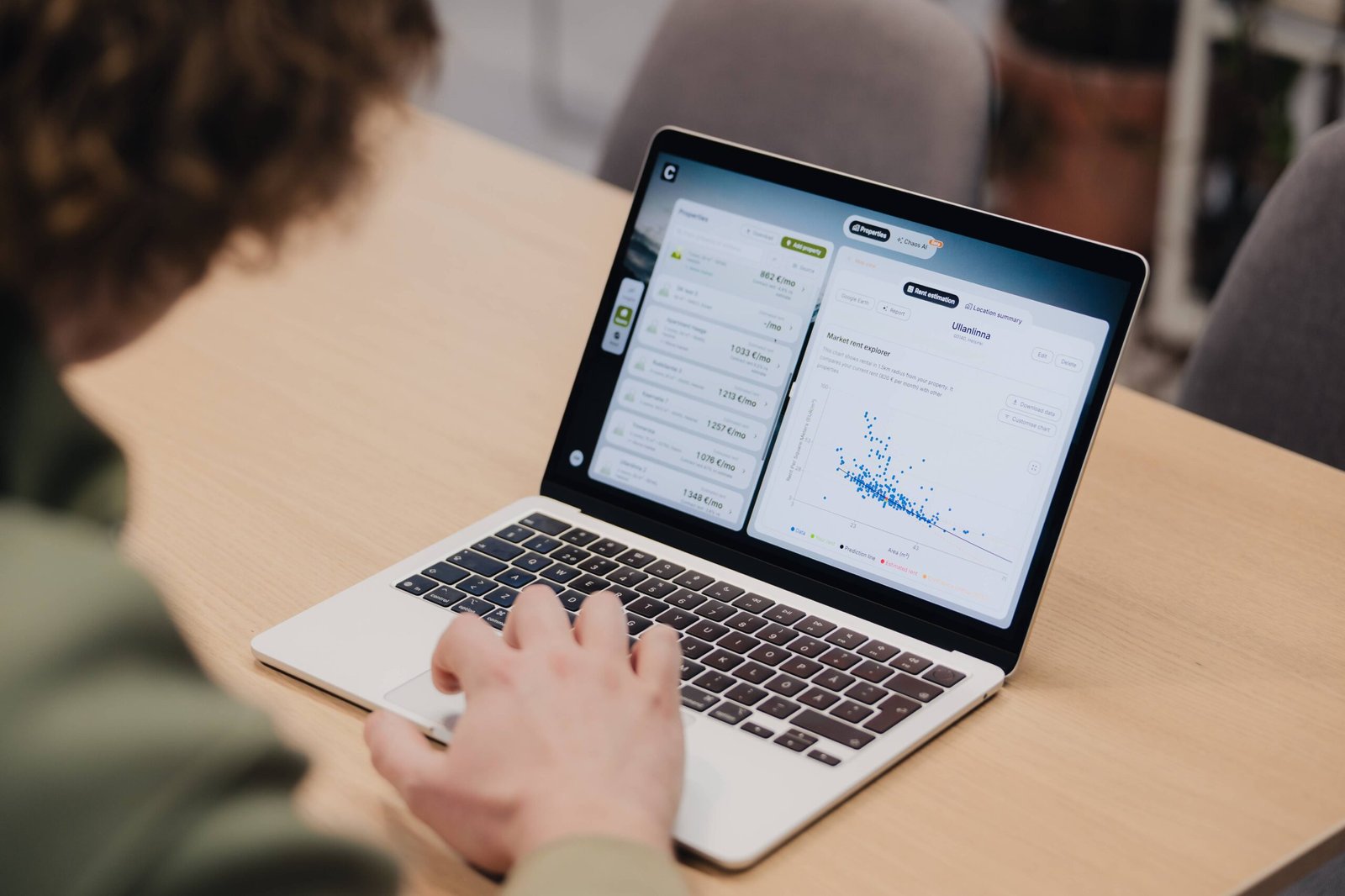
NRE: First, the interface. We’re not just data scientists—we’re designers. We believe that serious insights don’t need to look old-fashioned. Real estate is one of the most established industries in the world, and many of the tools it relies on feel exactly that way: outdated, fragmented, and uninspiring. We deliberately challenged that norm. CHAOS delivers institutional-grade intelligence through a clean, modern, intuitive interface—because clarity accelerates decisions, and good design builds trust.
Second, the “everything in one place” experience—but with real meaning behind it. Most proptech tools and legacy mapping systems focus on a single vertical: asset prices, footfall, demographics, or mobility. CHAOS brings all of these together and, more importantly, understands how they influence each other. Locations don’t behave in isolation—they are complex, interconnected systems.
That’s actually why we’re called CHAOS. We believe in the butterfly effect: small changes in one variable can fundamentally alter the outcome of a place. By modelling locations as entropic systems—where everything affects everything—we allow developers and investors to see reality as it is, not as simplified dashboards. The result is insight that feels intuitive, comprehensive, and immediately actionable.
IRHM: Sustainability is now a core priority in real estate. How does CHAOS help developers choose designs that are genuinely eco-friendly over the long term?
NRE: Sustainability is absolutely a priority in real estate today—but we didn’t start CHAOS by chasing sustainability as a trend. We started by building a system to truly understand locations. Sustainability is one of the most powerful outcomes of that capability.
What CHAOS provides is real, operational insight—not retrospective ESG reports. Location intelligence allows developers to see how environmental, social, mobility, and economic factors interact in the real world. And that interaction is where sustainable decisions are either made—or missed.
True green transformation is not about optimising a single building in isolation, like upgrading an HVAC system. It’s about looking at an entire portfolio across cities and geographies and asking smarter questions: Where will capital have the greatest environmental impact? Which interventions deliver measurable results fastest? Which technologies actually pay off in a given context?
A solar panel placed in the wrong orientation, next to dense tree cover, is not sustainable—it’s symbolic. Tearing down a structurally sound building instead of refurbishing it is often worse than upgrading an older asset. Even a “green” new development can be environmentally inefficient if it ignores mobility patterns, density, or existing urban infrastructure.
CHAOS enables developers to evaluate all of these factors together. By modelling locations as interconnected systems, we help teams choose designs and investments that reduce waste, avoid false green solutions, and deliver sustainability that holds up over the long term—economically, environmentally, and socially.
IRHM: Do you see significant differences between the urban challenges in a city like Helsinki and those in a rapidly growing city in Southeast Asia, or a global hub like London?
NRE: Yes—there are significant differences, and they matter. Cities operate under very different constraints: budgets, population growth rates, governance models, and cultural norms all shape how urban space functions. Something as simple as street food culture can dramatically influence public space, mobility, and local economies in one city, while being completely unviable in another.
That said, beneath these differences, cities are driven by patterns. Every city needs to understand what truly drives its locations—how people move, where activity concentrates, how demand forms. Those drivers are always local, but they are not always unique.
This is where location intelligence becomes powerful. If a district in Helsinki and a neighbourhood in Bogotá share the same underlying behavioural, mobility, and economic patterns, it would be a mistake to assume they require fundamentally different solutions just because they sit in different regions. Context matters—but patterns travel.
CHAOS allows cities and developers to respect local culture and constraints while also learning from global analogs. By reading the patterns beneath the surface, we can transfer insight across geographies and avoid reinventing solutions that already work elsewhere. Urban challenges may look different—but when the dynamics align, the outcomes often can too.
IRHM: Your recent investment will fuel expansion across the Nordics and the DACH region. What is the key market difference between the two, and which presents the biggest opportunity for CHAOS?
NRE: Expansion always introduces complexity because cultures differ—and with them, buying cycles, risk tolerance, and decision-making structures. That’s true across the Nordics and the DACH region.
The key difference is maturity versus scale. The Nordics are highly digital, innovation-forward, and relatively fast-moving. Decision-makers there are comfortable adopting new tools, which allows platforms like CHAOS to integrate quickly into existing workflows. It’s an ideal environment for proving value and accelerating adoption.
The DACH region, on the other hand, represents depth and scale. It is one of the most capital-intensive and professionally structured real estate markets in the world. Buying cycles tend to be longer and more conservative, but once trust is established, relationships are durable and platform adoption runs deep across portfolios.
What unites both regions is that the fundamentals of real estate do not change. Every investor, developer, or asset manager is ultimately seeking the same outcome: a profitable investment with the best possible risk-adjusted return. And that only becomes achievable when you truly understand the location.
This is where CHAOS has its strongest opportunity. The need for high-quality, decision-grade location intelligence is universal—and growing. The more complex the market, the more valuable that insight becomes. The Nordics offer speed and innovation momentum; DACH offers scale and long-term embedded value. Together, they form a powerful growth path for CHAOS.
IRHM: What has been the toughest challenge in introducing cutting-edge AI planning tools into the traditionally conservative real estate and construction sectors?
NRE: The toughest challenge has been trust.
When we started in 2017, at the peak of the first AI hype cycle, almost every conversation included the same concern: “We don’t want a black box.” Real estate professionals wanted to know exactly where insights came from and how conclusions were formed—because they had learned, often the hard way, that information in this industry is frequently framed, adjusted, or selectively presented depending on who delivers it.
There are many players in the market selling polished “insights,” yet real asset histories can be fragmented or obscured. Transactions may be structured across multiple entities to improve optics, while the underlying performance tells a very different story. As a result, experienced real estate leaders are understandably skeptical—not of data itself, but of interpretation.
This is where location intelligence changes the dynamic. By grounding insights in standardized, verifiable data across geographies, CHAOS removes much of the subjective framing and creates a shared, auditable foundation for decision-making. It shifts the conversation from opinion to evidence.
What’s interesting is how fast that mindset is now changing. With the mainstream adoption of tools like ChatGPT, we’re seeing senior managers and C-level executives use AI daily—not because it’s perfect, but because it’s fast, explainable, and consistently backed by open sources. The focus has moved from “Is this AI?” to “Can I trust where this comes from?”
Real estate will follow the same path. Once trust is established, adoption accelerates—and that has been the most important lesson in bringing cutting-edge AI into a traditionally conservative sector.

IRHM: Beyond expanding geographically, what is the single biggest new feature or AI capability that CHAOS is currently prioritising for development on the platform in the near future?
NRE: The single biggest capability we are prioritising right now is the evolution of our AI insights layer.
One of the most powerful features of CHAOS is the ability to converse with the platform to uncover insights about a location. This has progressed far beyond simple queries. Today, our AI can compare different geographies, interpret complex interactions, and answer macroeconomic and urban questions with the depth you would expect from an expert panel—not a dashboard.
What truly differentiates our AI is the data it reasons over. It doesn’t rely solely on public or generic sources. It integrates local market intelligence, regulatory data, and government-level information that is typically fragmented or inaccessible to end users. That grounding is what makes the insights both nuanced and trustworthy.
In addition, our AI can reason over a customer’s own inputs—such as assets, pricing assumptions, or portfolio data—and contextualise them against our market intelligence. This allows the platform to deliver insights that are not only market-aware, but directly relevant to the customer’s specific situation. By combining external intelligence with proprietary data, CHAOS moves from generic analysis to truly decision-grade guidance.
For the first time, this opens the door to something genuinely transformative: a platform that can advise not only professional investors, but also homebuyers, with thoughtful, evidence-based guidance. Choosing where to buy a home is one of the most important financial decisions people make in their lives. Our ambition is to ensure that decision is informed by the same quality of intelligence traditionally reserved for institutional players.
That’s where we see the future of CHAOS—democratising deep location intelligence, without compromising on rigor, trust, or expertise.
IRHM: As a woman in tech and urban development, what has been your biggest professional challenge that you had to overcome?
NRE: In many ways, my biggest professional challenge hasn’t been different from that of any entrepreneur trying to change an established industry. Disrupting traditional sectors means challenging habits, questioning long-held assumptions, and asking people to move away from the status quo. Resistance to change is universal—and that has been one of the constant challenges throughout my journey.
As a woman in tech and urban development, I’ve learned not to lead with gender as a barrier, but I’m realistic about dynamics. People naturally gravitate toward those who feel familiar, and in some environments that can create subtle biases. The key for me has been to stay focused on substance, consistency, and long-term credibility. Over time, results speak louder than perception.
What has been more defining—and more demanding—is building a company as a foreigner in another country. Learning new systems, navigating unfamiliar cultures, and building trusted networks from zero, all while creating real value, is not easy. Behind the headlines of entrepreneurship, that reality is often invisible.
At the same time, it has become one of my greatest strengths. Being an outsider gives you perspective. You question assumptions more freely, adapt faster, and focus less on fitting in and more on doing the work. You build, you learn, and you connect—without entitlement, but with intent. That mindset has shaped both my leadership and the company we’re building.




![[IRHM] logo](https://irhmagazine.com/wp-content/uploads/2025/08/IRHM-AWARDS-2025-1024x683.jpg)