


Oil and gas has spent the last two decades quietly becoming a real estate story as much as an extraction one. As operators fit wells, pipelines and rigs with sensors and shift routine monitoring to software, the industry’s physical footprint is changing: some of the people and functions once concentrated at the wellhead are moving towards control rooms, workforce accommodation and data infrastructure, all of which are property assets with their own investment logic.
The scale of that shift is real, even if the exact market figures vary depending on which research firm is counting. Grand View Research estimates the global digital oilfield market at approximately US$30.78 billion in 2025, projected to reach US$47.85 billion by 2033. Other research firms put the 2025 market at roughly US$30 billion, with forecasts varying considerably further out depending on methodology. Grand View Research puts North America’s share at 34 per cent of global revenue in 2025. The common thread is continued growth in the deployment of real-time data acquisition, automation and remote monitoring across oil and gas operations, and with it, changing demand for the places from which those operations are managed.
From wellhead to screen
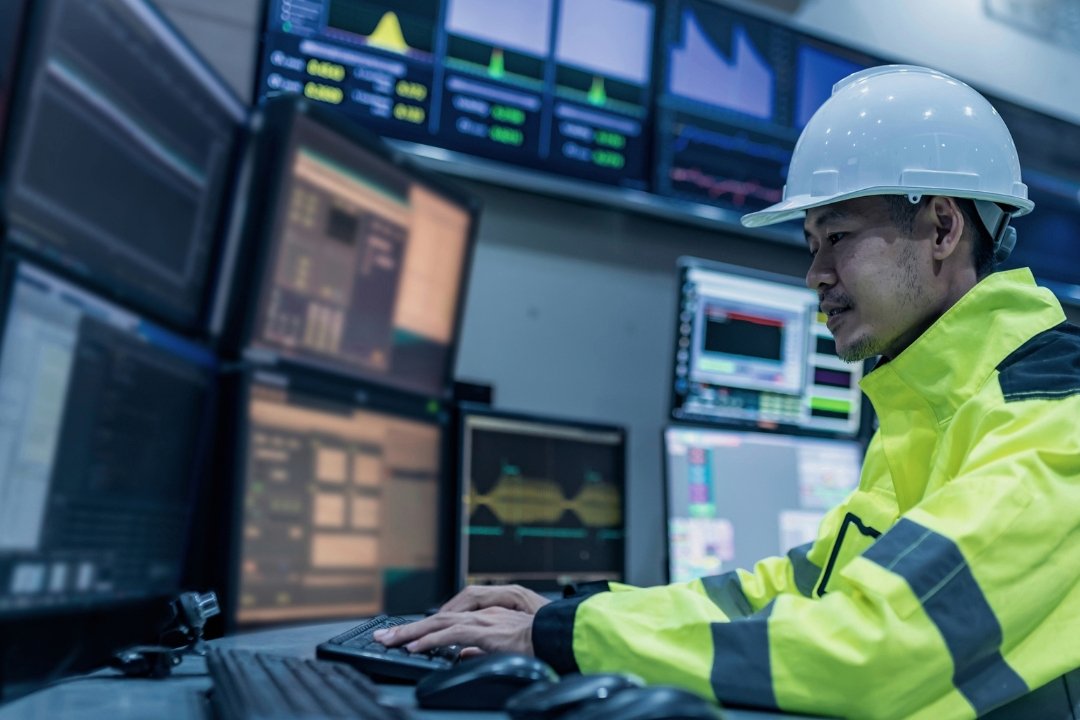
The core of digital oilfield technology is straightforward: sensors on wells, pipelines and drilling equipment feed continuous data to software that can flag problems, optimise production and increasingly support remote monitoring and decision-making with fewer personnel on site. Saudi Aramco was an early mover here, establishing a dedicated 24/7 Geosteering Operations Center in 2005, designed to monitor and geosteer drilling on up to 75 rigs simultaneously from a single location.
The effect on staffing is where this becomes a real estate story rather than a pure technology one. A Siemens-conducted conceptual study for a major Middle Eastern national oil company, presented at the Abu Dhabi International Petroleum Exhibition and Conference, projected that digital transformation and de-manning measures could reduce field headcount from 534 to 201 over five years, alongside a 5 to 7 per cent increase in production efficiency and an 85 per cent reduction in unsafe acts. These were projected benefits from the study, rather than results subsequently measured across an operating field. Fewer people permanently stationed at the wellhead does not necessarily mean fewer people employed. It can mean more people working from elsewhere, increasingly from control rooms and other onshore facilities with their own commercial real estate footprint.

The buildings digitisation built
That relocation of the workforce has produced genuine, purpose-built commercial property. ADNOC’s headquarters in Abu Dhabi, a 76-storey, 342-metre tower completed in 2017, houses the kind of centralised corporate and operational functions that digital oilfield operations increasingly depend on. Platforms such as ADNOC Panorama provide a digital layer across the company’s operations, bringing data and operational information into a centralised environment. The significance for real estate is straightforward: as more functions supporting dispersed physical assets are centralised, the office becomes part of the infrastructure through which those assets are managed.
The same pattern is visible, at a smaller scale, in the North Sea. Subsea services company Oceaneering has built a network of Onshore Remote Operations Centers, moving remotely operated vehicle piloting and other offshore support functions to onshore facilities. It launched its pioneering centre in Stavanger, Norway, in 2015 and has since expanded the network to Aberdeen, Morgan City in Louisiana and Macaé in Brazil. More recently, dredging and offshore services firm Boskalis opened its own Remote Operations Center in Aberdeen in April 2026, following an 18-month development programme and a £40 million investment in the centre and ROVs. The company says the facility will create more than 50 high-quality onshore roles over the next five years to support its offshore crews and vessels. For Aberdeen, a city whose economy and commercial property market have long been closely tied to offshore energy, it offers a particularly clear example of how remote operations can turn activity once associated with offshore locations into demand for specialised onshore facilities.
Workforce housing in the age of fewer boots on the ground
The other side of this shift plays out in hospitality real estate, specifically the purpose-built workforce housing that has developed into a specialised property segment in major onshore basins. Target Hospitality, listed on Nasdaq under the ticker TH, describes itself as one of North America’s largest providers of vertically integrated speciality rental accommodation, operating a network that totalled 16,991 beds across 29 communities as at 31 December 2025, concentrated in the Permian Basin of West Texas, the Bakken region of North Dakota and other US energy and government-sector markets. These facilities, often referred to as workforce accommodation or “man camps”, combine dormitory-style modular housing with catering, security and recreation facilities, and can house anywhere from dozens to more than a thousand workers at a single site.
That accommodation demand is also likely to be affected by the same automation trend reshaping staffing elsewhere in the industry, although the relationship is not straightforward. As fewer workers are needed permanently on site and more monitoring and decision-making shifts to remote operations centres in cities, workforce housing providers face a structural question about the shape of future demand. Providers in this space are already responding. Corporate Hospitality Services, a Permian Basin operator, describes future demand shifting towards smaller, more strategically located housing ecosystems that combine accommodation with dining, healthcare and recreation, rather than the large standalone camps associated with the shale boom years. At the same time, Target Hospitality has developed a distinct line of business, branded Target Hyper/Scale, providing purpose-built workforce accommodation for data centre construction crews. In November 2025, the company announced a 160 per cent expansion of one such community, taking capacity to 650 people with the potential to expand further to 1,500. The example illustrates how a workforce accommodation model developed for energy and other remote industries is now being adapted to support another major infrastructure build-out.

What this means for the industry
For real estate investors and hospitality operators with exposure to energy regions, digital oilfields point in two directions at once. Demand for large-scale, remote workforce accommodation could become more cyclical and specialised as automation changes the number and location of workers required on individual sites, with demand continuing to track drilling, maintenance and other project cycles. At the same time, a different category of property, including purpose-built control rooms, data centres and specialist office space in established energy hubs such as Aberdeen, Abu Dhabi and Houston, is likely to gain importance as operators centralise more monitoring, analysis and decision-making. The result is not necessarily less real estate demand, but a shift in the type and location of the space required.
For infrastructure investors, the connectivity layer underneath all of this is becoming increasingly important. Cellular and satellite links reaching well sites, edge computing hardware processing data closer to the point of collection, and the fibre and cloud infrastructure connecting remote assets to central operations are all part of the physical infrastructure required to make digital oilfields work. McKinsey has identified bandwidth, computing capacity, fibre, microwave and satellite connectivity as critical enablers of greater automation and optimisation in upstream operations. ADNOC, for example, is developing a private 5G network spanning 11,000 square kilometres to extend AI-driven solutions across its remote onshore and offshore operations. These investments increasingly bring aspects of oilfield infrastructure closer to the investment logic of telecommunications and digital infrastructure, although the scale and economics remain distinct.
Digital oilfields did not set out to be a property story. But an industry that once measured its physical footprint primarily in wellheads and rigs is increasingly adding office floors, workforce accommodation and digital infrastructure to that footprint. For real estate and hospitality investors, not just energy analysts, that changing geography is becoming increasingly difficult to ignore.
Digitalisation is changing not just how energy assets operate, but where the people, buildings and infrastructure supporting them are located