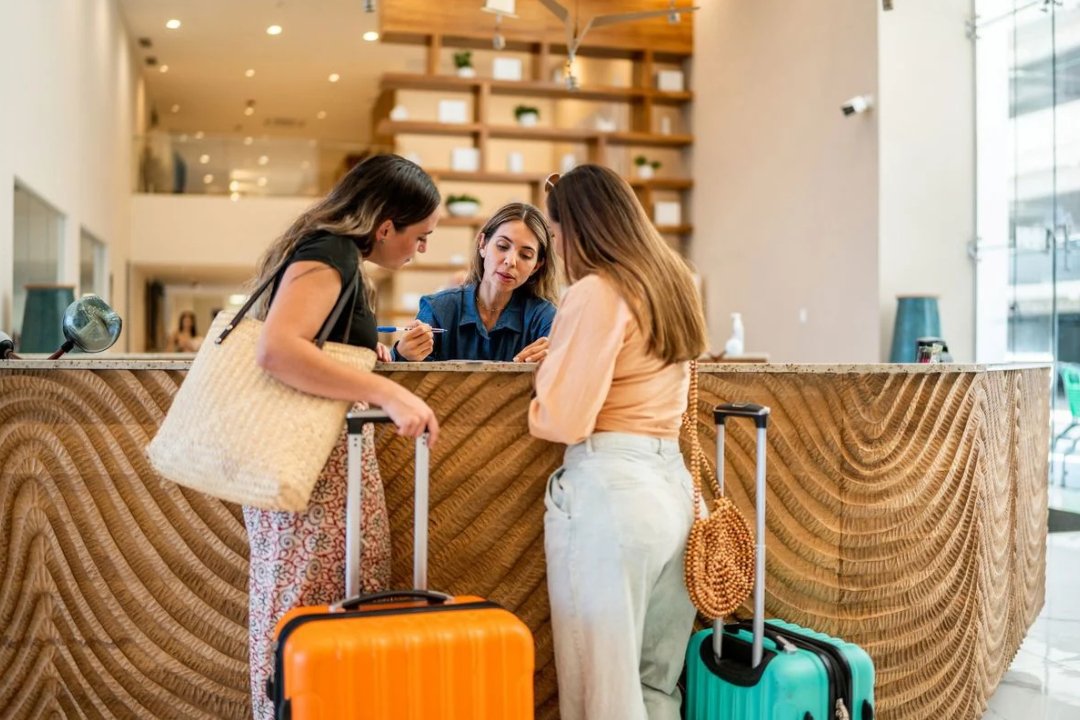



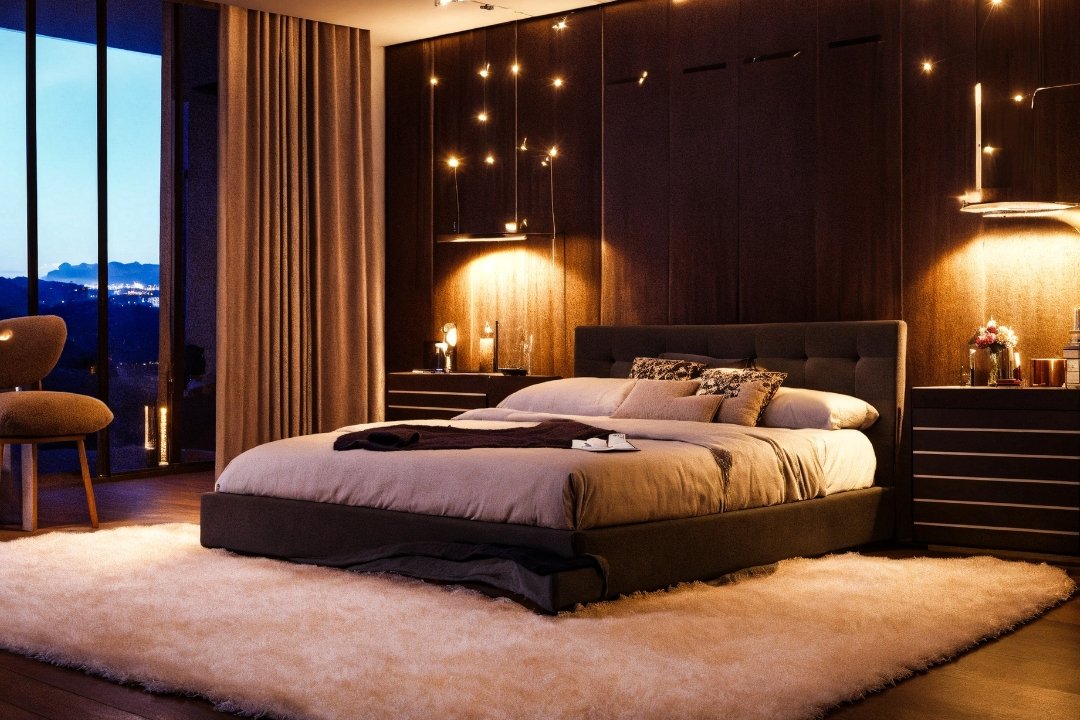

When Sarah Jenkins checks into a hotel room after a long flight, the first thing she reaches for is the bedside lamp. It is not harsh or fluorescent. Instead, it offers two settings: a blue-enriched daylight mode for staying alert on arrival and a warmer, dimmer tone to prepare her body for sleep. She switches to the warmer setting before bed. When she wakes, she turns it back to the daylight mode to feel alert again. Nothing about the experience feels clinical or designed. It simply feels right.
Garcia is staying at the Crowne Plaza Atlanta Airport, where IHG Hotels and Resorts has installed Healthe’s JOURNI circadian lighting lamp in guest rooms. The portable bedside device gives travellers direct control over their light exposure based on the time of day, drawing on research showing that 80 per cent of travellers struggle to sleep away from home.
This is neuro-responsive design: interior spaces shaped by neuroscience and neuroaesthetics, engineered to influence how our brains respond to their surroundings. Neuroaesthetics examines how the brain reacts to visual and sensory stimuli. When exposed to specific patterns or light frequencies, the visual cortex and nervous system can relax and regulate more effectively. Not through luxury or comfort alone, but through science-backed interventions that reduce stress and improve sleep. Architecture firms like Gensler and academic institutions increasingly refer to this as ‘design for the unconscious mind,’ acknowledging that up to 95% of brain processing occurs below conscious awareness. This makes ‘active’ interventions, where the building itself works on the occupant’s biology, critical for achieving measurable wellness outcomes. The industry is now moving beyond passive wellness such as gyms and spas towards these active neurological environments.
As design leaders recognise, this shift is substantial. “While we spend more than 90 per cent of our lives indoors, our clients are realising that even with the best design, they cannot create the conditions for measurable wellness outcomes without reexamining their programming and policies,” explains Stacey Olson, Global Wellness Leader and Director of Sustainable Design at Gensler, a leading architecture and design consultancy.
Post-pandemic wellness has become a baseline expectation in luxury markets. Wearable technology now generates real-time data about physiological responses. Emerging certification frameworks are beginning to mirror standards like LEED. The numbers reflect rapid expansion: the global wellness real estate sector reached $584 billion in 2024, following 19.5 per cent annual growth over the previous five years. Annual growth is projected at 15.2 per cent to 2029, reaching $1.1 trillion, according to the Global Wellness Institute. For hospitality operators, the effect on Revenue Per Available Room (RevPAR) and long-term asset value is already being tracked at early-adopter properties. The results are encouraging.
The Science Behind the Shift
The human body runs on rhythms. The most well-known is the circadian rhythm, a roughly 24-hour cycle that governs sleep, hormone release, body temperature and alertness. When we travel across time zones or work night shifts, we disrupt this rhythm. The consequences are measurable: reduced sleep quality, increased fatigue and a decline in executive function and decision-making, which are critical faculties for the high-performance individuals who inhabit luxury real estate and hospitality spaces.
Circadian lighting works by mimicking the spectrum of natural light at different times of day. This is known as the non-visual effects of light, which describes how light influences our biology beyond what we consciously see. Blue-enriched light during daylight hours signals the body to stay alert and suppress melatonin production. This works through specialised cells in the eye called intrinsically photosensitive retinal ganglion cells (ipRGCs), which send signals directly to the brain’s master clock. Warmer, dimmer light in the evening allows melatonin to rise, preparing the body for sleep. Research published in the journal Sleep in 2024 found that shift workers exposed to circadian-informed lighting slept 52 minutes longer by day seven of a simulated schedule compared to those in standard lighting conditions. The study also reported roughly 50 per cent fewer lapses in vigilance, which is a key safety and performance metric for business travellers and high-performance residents alike. These are not marginal gains. They translate directly into how guests experience hotel stays and how residents feel in their homes.
Circadian lighting addresses the body’s internal clock, but it is only one part of the neuro-responsive toolkit. Biophilic design and fractal geometry work on a different register, operating through the visual system. Mid-range fractal patterns, typically those with a fractal dimension between 1.3 and 1.5, induce a state known as fractal fluency. This describes the ease with which the human brain processes natural patterns, a process that has been shown to reduce heart rate and stress during recovery. For people with autism or ADHD, these patterns reduce visual noise and cognitive overload, promoting calm where sharp geometric designs might overwhelm. Research from the journal Building and Environment found that exposure to these patterns lowered stress markers more effectively than purely geometric or overly complex visual stimuli. In luxury real estate, where calm commands a premium, this effect translates into measurable guest satisfaction scores, stronger brand loyalty and the kind of repeat visits that underpin long-term asset value. The effect may be subtle, but its commercial logic is not.
The Business Case
For developers and investors, the science is compelling. Wellness-certified residential properties command 10 to 25 per cent premiums at resale, according to the Global Wellness Institute and National Association of Realtors. Commercial properties with significant wellness amenities achieve rental premiums of 4.4 to 7.7 per cent per square foot. For a mid-rise residential building or boutique hotel, these premiums represent significant additional revenue.
Beyond traditional wellness markets, neuro-responsive design expands the total addressable market considerably. Roughly 15 to 20 per cent of the population is neurodivergent (autism, ADHD, dyslexia and related conditions). By designing for sensory inclusion, developers access demand from this substantial segment, creating competitive advantage whilst broadening appeal to all guests who benefit from calmer, more carefully considered spaces.
Early adopters are integrating these elements. Wellness-focused hotels and resorts across the Asia-Pacific region and Europe are implementing circadian systems, fractal accents and biophilic elements. Some are commissioning ‘neuro-audits’, assessments using tools like electroencephalography and artificial intelligence to verify that spaces deliver measurable neurological benefits. This represents the next frontier of certification. It moves beyond approved building specifications, as seen in LEED and WELL, towards verified biological responses in the people who occupy them. These remain largely pilots, not yet standard practice, but momentum is building.
The shift in commercial thinking has been significant. Until recently, wellness was treated as a cost line. “A lot of established hospitality brands looked at wellness as the spa and the gym; it was a necessary evil that you had to build. There wasn’t an ROI,” says Sarah Bonsall, who served as Regional Director of Architecture and Design for the Americas at Six Senses Hotels Resorts Spas. “That has changed fundamentally. Now, wellness is a commercial driver.” What has changed is the ability to measure outcomes. Investors are paying close attention to these metrics.
One of the strongest arguments for neuro-responsive design is its low capital expenditure relative to yield. These interventions do not require radical architectural redesign. Circadian lighting can be retrofitted into existing suites at a fraction of new-build cost. Fractal patterns can be introduced through textiles and wall treatments. Quiet zones can be added without significant structural work. Developers can pilot systems in selected areas, measure results and scale based on performance. This represents a low-CAPEX, high-yield proposition that is well suited to both new developments and existing assets looking to increase their market position.
Hospitality Applications: Rejuvenation and Inclusivity
The hotel industry is where neuro-responsive design has gained the most traction. Hotels must help tired people rest and recover. If a hotel can address traveller fatigue in a measurable way, guest satisfaction rises, service recovery costs fall, loyalty increases and return bookings follow.
When circadian lighting systems are properly implemented, they adjust light spectrum according to the time of day. The guest experiences this as a natural, comfortable environment. There is no sense of being in a lighting experiment. The room simply feels right. This is the ultimate goal of neuro-responsive design: science so well integrated that its presence is felt without being seen. In luxury hospitality, effortlessness is the highest standard.
The approach to sensory inclusivity takes two distinct forms, each with its own commercial logic. The first is the dedicated space model, where a hotel creates a specific room designed for neurodivergent guests. The Tullamore Court Hotel in Ireland offers a dedicated Sensory Room equipped with interactive panels, an Aura Projector, fibre optic lights and ear defenders, designed for guests with autism, dementia and ADHD. The President Hotel in Cape Town launched its neurodivergent room in October 2025, featuring weighted blankets, sensory quilts, a sensory tent for children, adjustable lighting, a white noise machine and a fidget box, developed in collaboration with Autism South Africa. The second model is integrated design, where neuro-responsive principles are applied across the entire property. Lighting schemes, texture choices, acoustic treatments and spatial planning are all considered so that every guest benefits rather than a specific few. The most effective operators are moving towards this second approach, recognising that environments designed to calm and support neurodivergent guests tend to improve the experience for all guests.
These offerings tap into a fast growing segment. The International Board of Credentialing and Continuing Education Standards estimates that families with autism and other cognitive differences make around 32 million trips annually, and awareness of neurodiversity continues to rise. Properties offering genuine sensory inclusion report lower service recovery costs and stronger word-of-mouth, both of which are directly linked to revenue.
Challenges and What Comes Next
The barriers to adoption are real but manageable. Installing advanced circadian lighting or commissioning neuro-audits requires upfront capital and not all operators have the balance sheet to move quickly. Emerging tools that rely on biometric feedback raise questions that require clear ethical frameworks around data collection, guest consent and privacy standards. Industry guidelines are still catching up with the technology.
There is also the question of rigour. Circadian lighting’s sleep benefits are well-established. Real-world financial returns at scale are promising but still building. Full neuro-audits using EEG and artificial intelligence remain in pilots, not yet standard practice, and the quality of claims made by vendors varies considerably. Buyers should apply the same scrutiny they would to any performance-based investment.
The more pressing strategic risk is market bifurcation. Operators who invest now will accumulate data, guest loyalty and brand positioning that compounds over time. Those who wait will find themselves competing on amenities, creating a race where the bar keeps rising rather than focusing on outcomes. High-end hotels and luxury residences are currently leading adoption, but the economics of retrofit mean that mid-market operators can enter this space without the capital requirements of new-build wellness infrastructure.
By 2030, these principles are expected to become standard and early movers will hold a clear and durable advantage
Conclusion
The shift currently reshaping luxury real estate and hospitality is subtle and often invisible. It does not announce itself with dramatic silhouettes or sweeping architectural statements. Instead, the change is internal and carefully considered. Rooms are lit in ways that respect human biology. Patterns are chosen to soothe the nervous system. Materials are selected as much for their neurological impact as for their tactile appeal. These are not merely aesthetic decisions. They are science-backed interventions with measurable outcomes.
For developers and hospitality operators, the time to act is now. Investment in circadian systems, biophilic design and sensory inclusion delivers clear returns across three dimensions: higher asset premiums, deeper brand loyalty and concrete alignment with evolving ESG objectives. More fundamentally, it marks a deeper shift in what a building is expected to do. Currently, a high-performance space is no longer judged solely as a shelter. It is an active tool for human well-being that has a measurable effect on the people inside it.
Whilst hospitality has led the way, residential real estate is closing the gap quickly. Today’s homeowners are beginning to demand the same neurological consideration in their permanent residences: circadian-integrated bedrooms, fractal-informed living spaces and sensory-conscious home offices designed to reduce the fatigue of constant digital exposure. The most effective developers are already building these principles into their foundations rather than treating them as after-market additions.
The roadmap for the industry is straightforward: begin with high-impact, accessible pilots. Circadian lighting in primary suites or fractal accents in shared lobbies are good starting points. Measure the guest and resident response. Scale based on performance.
For travellers like Sarah Jenkins, the result is simple: a night of deep, restorative sleep and the energy to make the most of the day ahead. For the developer and investor, it is the discovery of a new category of value. Buildings do not just house life; they actively support it.



![[IRHM] logo](https://irhmagazine.com/wp-content/uploads/2025/08/IRHM-AWARDS-2025-1024x683.jpg)